How to Select Outdoor Dining Sets Right
A dining set that looks right on a mood board can fail fast on site. Chairs scrape against planters, table heights clash with built-in seating, finishes fade under full sun, and a six-week lead time turns into a procurement problem. That is why knowing how to select outdoor dining sets is less about picking a style and more about specifying for performance, circulation, and long-term use.
For residential projects, a poor choice creates daily friction. For hospitality and commercial spaces, it affects guest comfort, maintenance costs, and turnover efficiency. The right set has to do more than match the architecture. It needs to fit the space correctly, hold up to the local climate, support the intended traffic level, and arrive on schedule in the right quantities and finishes.
How to select outdoor dining sets starts with use case
Before reviewing materials or silhouettes, define how the space will operate. A rooftop restaurant, a private villa terrace, and a resort dining deck may all need outdoor dining, but they do not need the same specification.
In a residential setting, buyers usually have more flexibility to prioritize visual preference and comfort. In hospitality, stacking efficiency, cleanability, and replacement consistency often matter just as much as appearance. In commercial shared spaces, you may also need to account for higher daily traffic, stricter maintenance cycles, and more frequent layout changes.
This is where many selections go off track. Teams choose by image first, then try to force the product into an operational requirement it was not built to meet. A better process is to start with occupancy pattern, expected use frequency, service style, and maintenance capacity. If the site hosts quick breakfast service, the seating profile may need to be more upright. If it is designed for long evening meals, chair comfort and table spacing become more critical.
Size the layout before you size the table
Outdoor dining failures are often layout failures. The table may be beautiful and technically seat eight, but if guests and staff cannot move around it comfortably, the specification is wrong.
Start with the actual footprint, not the nominal seating count. Measure the usable area after accounting for walls, planters, door swings, columns, pool edges, and shade structure posts. Then build circulation around the table. Guests need room to sit down and push chairs back without blocking pathways. Service teams need enough clearance to move efficiently, especially in restaurants, hotels, and multi-unit residential projects.
Round tables can work well where circulation is tight or where you want softer movement around the layout. Rectangular tables usually maximize seating efficiency, especially in long terraces or banquet-style arrangements. Square formats can be effective in modular layouts, but they can also create awkward dead space depending on the site geometry.
Table height matters too. Standard dining height is the default for most applications, but always confirm compatibility with the chair seat height and arm clearance. If chairs do not tuck properly, the set will feel crowded even when the area seems large enough on paper.
Match seating count to realistic usage
Do not over-specify a dining set just because the footprint allows it. In many projects, a slightly smaller set performs better because it improves comfort and circulation. A four-seat layout with generous spacing often delivers a better guest experience than a compressed six-seat arrangement.
For hospitality, think about turnover and flexibility. Two smaller tables may outperform one large fixed table because they give operations more control over party size and floor planning. For villas and private terraces, extension tables can be useful, but only if the expansion mechanism is durable and simple enough for regular use.
Material selection drives lifecycle cost
If you are deciding how to select outdoor dining sets for long-term value, material choice is where the real economics sit. The wrong material may lower initial cost, but it usually raises maintenance, replacement, and visual inconsistency over time.
Powder-coated aluminum remains a strong option for many outdoor dining applications because it is lightweight, corrosion-resistant, and easy to maintain. It works especially well in coastal or high-humidity environments when finishing quality is controlled properly. Not all aluminum products perform equally, though. Gauge, joinery quality, and coating consistency all affect lifespan.
Teak and other hardwood looks can add warmth and premium character, particularly in villa, resort, and upscale hospitality settings. The trade-off is maintenance. If the client expects the original tone to remain uniform, the site needs a realistic upkeep plan. If natural weathering is acceptable, wood can age well, but that expectation should be aligned before purchase.
Synthetic wicker and rope details can soften the look of a project and support a more relaxed design language. They also introduce specification questions around UV resistance, cleaning, and long-term tension retention. In high-traffic environments, decorative woven elements need to be selected carefully. What looks refined in a showroom can become labor-intensive on site if the material traps debris or wears unevenly.
Stone, sintered stone, ceramic, and HPL table tops each bring different performance advantages. Some offer stronger scratch resistance, some better heat tolerance, and some easier stain management. There is no universal best option. The right choice depends on the service model, exposure conditions, and maintenance reality.
Climate matters more than trend
Outdoor dining in full desert sun is not the same as outdoor dining in a shaded garden. Heat gain, UV exposure, salt air, wind, and seasonal storage all affect what will perform well.
Dark finishes can become uncomfortably hot in exposed settings. Lightweight chairs may shift in windy rooftop locations. Textured surfaces may look premium but require more effort to keep presentable in dusty environments. These are not minor details. They shape user experience every day.
Comfort should be specified, not assumed
A chair can look generous and still be uncomfortable over a full meal. Seat depth, back angle, arm height, and cushion density all affect dwell time and guest satisfaction.
For restaurants and hotels, comfort should match the intended dining duration. Quick-service venues can use a more compact and upright chair profile. Destination dining and resort settings usually need more support and a more relaxed sit. For residential projects, comfort expectations may be even higher because the furniture is used for longer, less structured occasions.
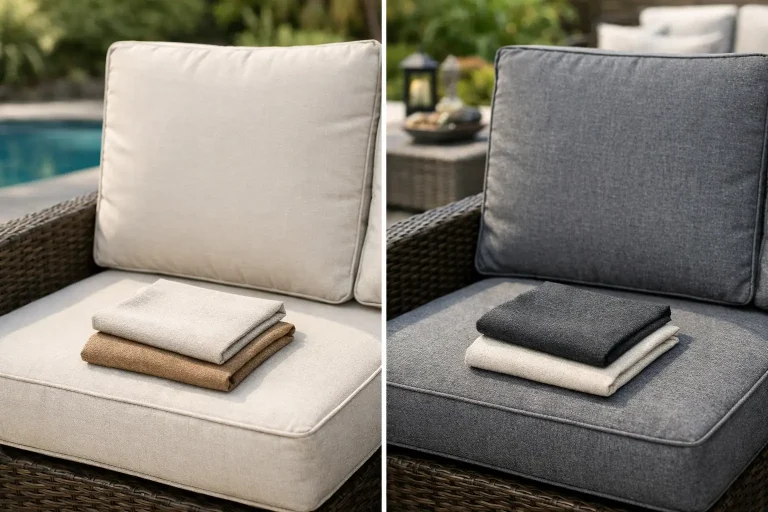
Cushions deserve the same level of scrutiny as frames. Outdoor foam quality, fabric performance, water drainage, and removable cover construction affect how a set looks after one season, not just on delivery day. If the project team wants a tailored upholstered look outdoors, the specification must support it with the right technical construction.
Design consistency across the full outdoor scheme
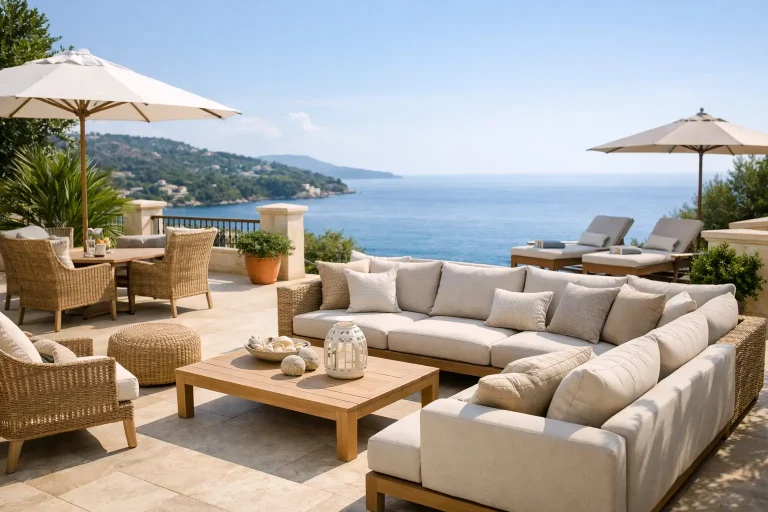
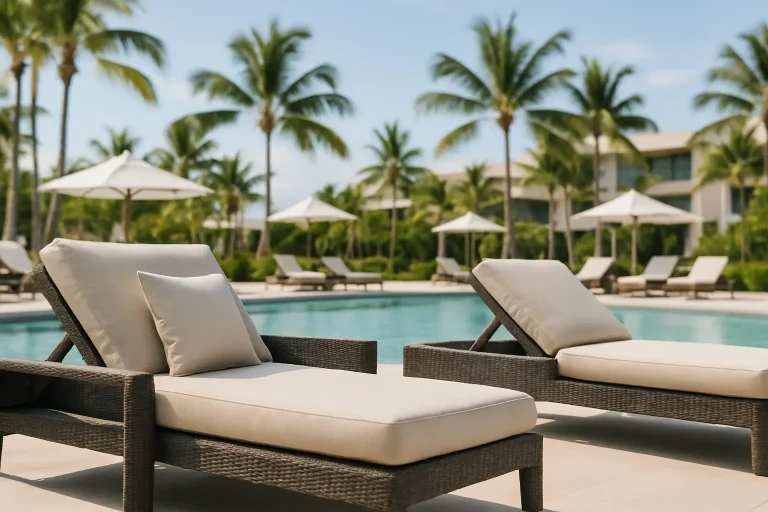
A dining set should not be specified as an isolated item. It needs to sit within the wider outdoor environment, especially when the project includes lounge seating, poolside furniture, bar settings, and accessories.
This is where a catalog-first procurement approach has real value. Coordinated finishes, material continuity, and proportional balance across categories help the space feel intentional rather than assembled from disconnected pieces. For developers, hospitality groups, and multi-zone projects, this consistency also simplifies approvals and future replenishment.
If the dining area sits adjacent to a lounge zone, check that scale, color temperature, and design language align. A heavy, formal dining set can feel visually out of place next to low-profile contemporary lounge furniture. The opposite is also true. Overly casual dining pieces can weaken the perceived quality of an otherwise premium outdoor scheme.
Evaluate supplier capability, not just product images
Knowing how to select outdoor dining sets also means knowing how to select the right supplier. For B2B buyers, the product is only part of the equation. The real risk usually sits in execution.
Can the supplier maintain finish consistency across volume? Can they support custom dimensions or material changes when the project requires it? Can they provide drawings, mock-up approvals, and clear lead time communication? Can they handle phased delivery across multiple sites or international destinations without losing control of the specification?
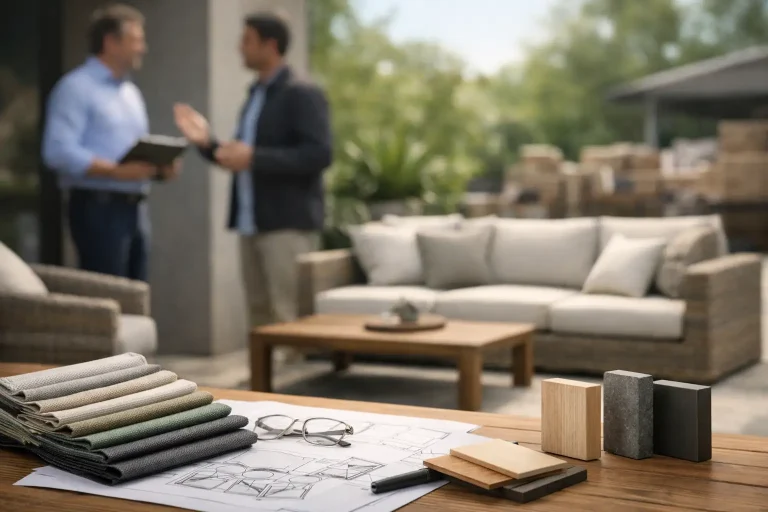
These questions matter because outdoor dining sets are rarely ordered in isolation on larger projects. They are part of a broader furnishing package with deadlines, approvals, and installation windows. A vertically integrated partner with manufacturing control, broad SKU depth, and project support can reduce friction across the entire procurement cycle. That is particularly relevant when buyers need design consultation, swatch review, or production visibility before committing at scale.
PNZ Space Global approaches this process with that project reality in mind, supporting buyers with design coordination, material flexibility, and delivery control that extends beyond a simple product transaction.
How to select outdoor dining sets without creating replacement issues
Short-term buying often creates long-term inconsistency. A set that cannot be replenished, matched, or repaired easily may become a problem after the first damaged table top or discontinued finish.
Ask early about replacement strategy. Confirm whether the supplier can support future volume, matching pieces, and finish continuity. This is especially important for hospitality groups, residential compounds, and developers furnishing multiple units over time. A strong initial specification should make later additions easier, not harder.
It also helps to standardize where possible. That does not mean every project should look the same. It means selecting smartly within a controlled family of products and finishes so procurement, maintenance, and replacement stay manageable.
The best outdoor dining sets do not simply fill a patio. They support how the space performs, how the brand is experienced, and how the project holds up after installation. Choose with the site, the use case, and the full delivery process in view, and the furniture will work harder for the project long after the first presentation is approved.