Outdoor Sofa or Daybed for Commercial Spaces
A pool deck that looks right in renderings can fail fast once guests start using it. That is usually where the outdoor sofa or daybed decision becomes more than a styling choice. In hospitality, multifamily, and high-end residential projects, this piece shapes circulation, guest behavior, maintenance load, and the overall value of the space.
The question is not which one looks more luxurious. Both can. The real question is which format performs better for the setting you are furnishing, the traffic you expect, and the service standard you need to maintain.
Outdoor sofa or daybed: what changes in real use
An outdoor sofa supports structured social use. People sit upright, gather in groups, and move in and out of the seat without much friction. That makes it a strong fit for rooftops, terraces, restaurant lounges, club areas, and villa patios where conversation and turnover matter.
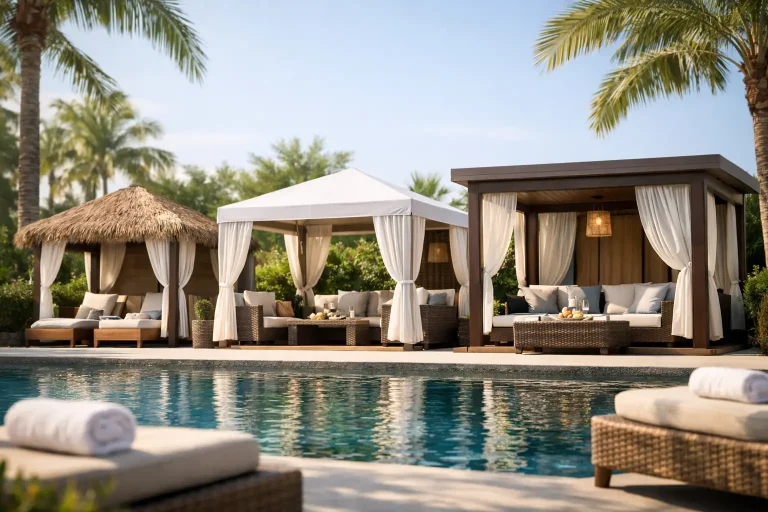
A daybed changes the rhythm of the space. It encourages longer stays, more reclined posture, and a more private experience. Around pools, beach clubs, resort decks, and premium amenity zones, that can be exactly the point. A daybed signals retreat and exclusivity in a way a standard sofa usually does not.
This is where many procurement decisions go off track. Teams sometimes choose based on visual impact alone, then discover the furniture is influencing how guests occupy the space. A sofa often increases seating efficiency. A daybed often reduces density while raising perceived luxury. Neither outcome is automatically better. It depends on the business model behind the project.
Start with the commercial objective, not the silhouette
If the space needs to support higher guest volume, frequent rearrangement, and flexible groupings, a sofa usually gives you more control. Modular outdoor sofas are especially useful in projects where layouts may shift by season, event schedule, or tenant profile. They help designers build clean zoning while keeping replacement and future expansion manageable.
If the goal is premium positioning, longer dwell time, and a destination feel, a daybed can justify its footprint. This is common in luxury resorts, private cabanas, pool clubs, and branded residential amenities where a lower seat count is acceptable because the experience carries more value.
For developers and operators, this becomes a math problem as much as a design decision. How many people need to be seated comfortably? How long do they stay? How often is the area cleaned and reset? Is the furniture expected to support food and beverage service, or is it meant for passive lounging? Those answers point to the right format much faster than mood boards do.
Where an outdoor sofa performs better
Outdoor sofas are typically the more efficient choice for mixed-use environments. They work well in spaces that need conversation seating during the day and social flexibility at night. On rooftop lounges and restaurant terraces, that matters because furniture has to support different user patterns without requiring constant operational intervention.
They also simplify zoning. A sofa pairs naturally with lounge chairs, coffee tables, and side tables, creating layouts that are easy to specify at scale. For procurement teams, that often means clearer quantity planning and more predictable installation across multiple sites.
From a maintenance standpoint, sofas can also be easier to manage when cushions, frames, and modules are standardized. If one section requires replacement, the entire seating arrangement does not need to be reworked. In larger commercial rollouts, that serviceability matters.
There is also a behavioral advantage. Sofas keep users more upright, which tends to align better with hospitality service, casual meetings, shared use, and spaces where turnover supports revenue. They feel relaxed without becoming too private or too territorial.
Where a daybed earns its footprint
A daybed is less about efficiency and more about atmosphere. It creates a visual anchor and immediately shifts a space toward leisure. That is why it performs best where relaxation is the product, not just a byproduct of good design.
Poolside settings are the obvious example, but not the only one. Spa terraces, beachfront properties, private villa gardens, and premium upper-deck lounges can all benefit from daybeds when the layout allows enough breathing room. In these environments, the furniture is doing brand work. It tells guests they are in a space designed for escape, not just seating.
That said, a daybed asks more from the plan. It needs adequate clearance, stronger material selection, and careful placement to avoid blocking views or circulation. In compact layouts, it can overpower the space quickly. In high-traffic zones, it may create friction because users tend to settle in longer and claim more area than initially intended.
For procurement and design teams, this means the daybed should be specified with intent. If it is included simply to elevate the look, it can become an expensive inefficiency. If it is placed where the guest journey supports it, the result can be high impact and commercially justified.
Material and construction matter more than the format
Whether you specify an outdoor sofa or daybed, the bigger risk is choosing a residential-grade build for a commercial environment. GCC heat, UV exposure, pool chemicals, humidity, and frequent cleaning will expose weak materials fast.
Frame selection should be based on the operating environment. Powder-coated aluminum remains a reliable choice for many projects because it balances corrosion resistance, manageable weight, and clean contemporary styling. Synthetic wicker can still work in the right application, but only when the fiber quality and weave consistency are strong enough for prolonged outdoor exposure. Teak delivers warmth and a premium look, though it comes with a maintenance profile that needs to be understood upfront.
Cushion construction is just as important. Quick-dry foam, performance fabrics, and removable covers are not upgrades for commercial use. They are baseline requirements in many outdoor settings. A beautiful daybed with poor drainage or a sofa with fabric that fades unevenly will create replacement costs long before the project should be cycling inventory.
This is where vertically integrated suppliers offer a real advantage. When design, manufacturing, and quality control sit within one process, teams have better visibility into specifications, finish options, mock-up approvals, and production consistency. That matters when buyers are placing large-volume orders and cannot afford surprises after installation.
Layout strategy: density versus experience
The best specification decisions usually come from understanding the space at a planning level, not a product level. A rooftop for social gathering may need more sofas because the goal is to create multiple conversation zones while preserving clear circulation paths. A resort pool deck may justify more daybeds because the target experience is slower, quieter, and more exclusive.
In some projects, the right answer is not sofa or daybed. It is both. A balanced scheme can place sofas in communal zones and daybeds in premium edges, poolside positions, or view-facing locations. That gives operators range. It also gives designers a stronger hierarchy within the layout.
Mixed specifications are often the smartest route for hospitality and large residential amenity projects because they let the furniture support different user behaviors without forcing one seat type to do every job. The key is discipline. If both are used, each should have a defined role in the plan.
Procurement considerations that affect the final decision
For commercial buyers, the furniture itself is only part of the purchase. Lead time, finish consistency, replacement planning, and installation coordination often matter just as much. A daybed with custom upholstery may be visually strong, but if replacement covers take too long or component tolerances vary between production batches, the operational cost rises.
An outdoor sofa system may offer better lifecycle value because it is modular, easier to phase, and more adaptable across future projects. A daybed may deliver stronger branding value in guest-facing spaces where visual identity drives room rates, bookings, or property perception. Both can be right. The stronger choice is the one that aligns with the project brief and can be delivered at the required quality level, on time, and at scale.
That is why many trade buyers now favor suppliers who can support more than product selection. Design consultation, 3D drawings, material swatches, mock-up review, and white-glove delivery reduce decision risk before furniture reaches the site. For complex projects, that support is often what keeps the schedule intact.
PNZ Space approaches this category with that full-project view in mind, helping buyers specify outdoor furniture not only for appearance, but for performance, logistics, and long-term consistency across residential, hospitality, and commercial environments.
How to choose with confidence
If your project needs flexible seating, better density, and broad usability, start with an outdoor sofa. If it needs a premium leisure statement and the layout can support lower density, a daybed may be the stronger investment. If the space serves multiple user types, combine both and let the layout assign purpose clearly.
The smartest specification rarely comes from asking which piece is more attractive. It comes from asking which one will still look right, function well, and support operations after a full season of real use. That is the standard worth designing for.