Custom Finish Outdoor Furniture Project Example
A rooftop deck can look resolved on a rendering and still fail in procurement. The usual problem is not the furniture silhouette. It is the finish. A strong custom finish outdoor furniture project example shows how color, texture, sheen, and material pairing affect approvals, lead times, maintenance, and final site performance.
For designers, developers, and hospitality buyers, finish customization is not a cosmetic add-on. It is a specification decision that touches brand alignment, weather resistance, replacement planning, and installation sequencing. When the supplier controls design support, manufacturing, and logistics under one system, that decision gets easier to manage.
A custom finish outdoor furniture project example in practice
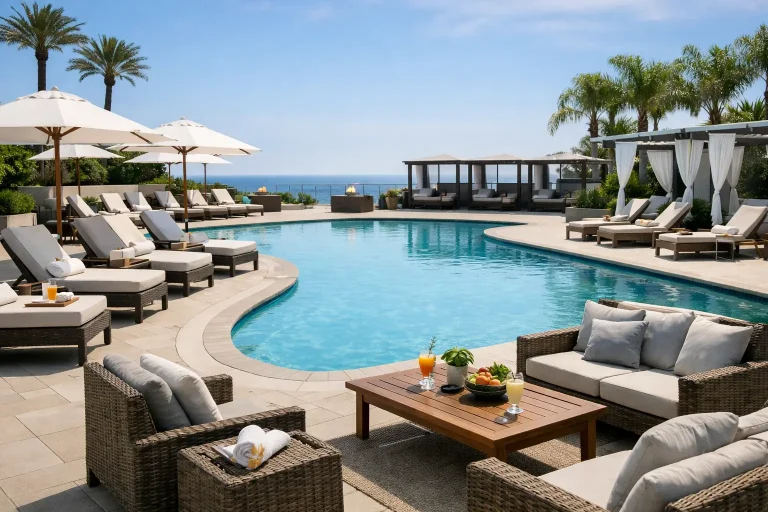
Consider a mid-scale hospitality terrace that needs to serve three functions at once: daytime casual dining, evening lounge use, and a premium visual identity that photographs well for marketing. The buyer is sourcing dining chairs, lounge seating, poolside chaises, side tables, and shade elements across one outdoor scheme. The baseline catalog offers the right forms, but the standard finishes do not match the project palette.
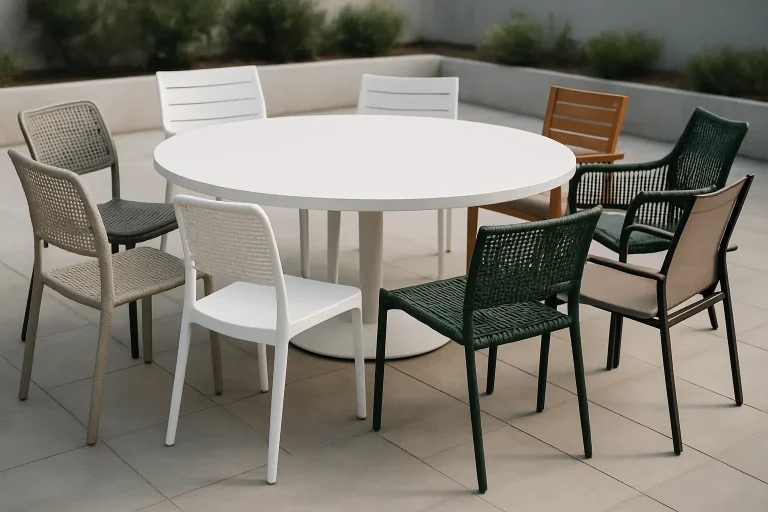
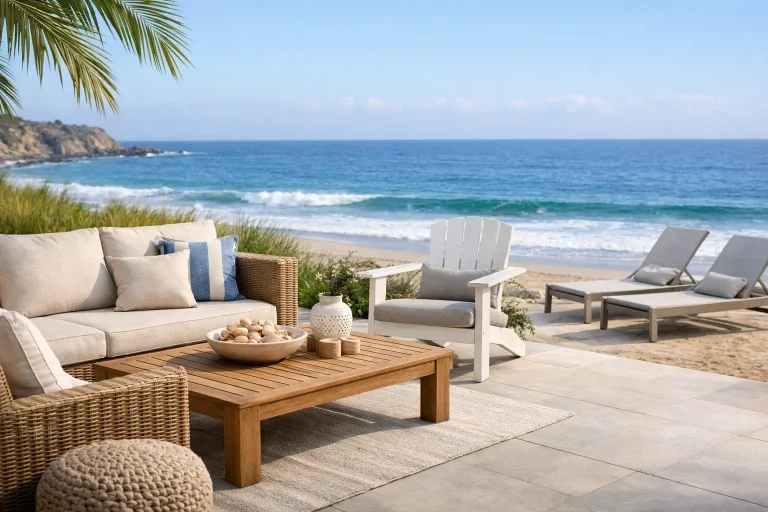
The design team wants a warmer, more residential look than the default commercial assortment. They specify a sand-toned powder-coated aluminum frame, teak-look slats instead of a darker wood tone, and performance upholstery in a muted mineral color that complements stone flooring and softens the glare common on exposed rooftops. On paper, that sounds straightforward. In execution, it creates a chain of decisions that needs structure.
The first requirement is finish compatibility. Not every frame color works equally well across lounge, dining, and pool categories, especially when products come from different collections. The second is durability. A lighter frame can elevate the design, but it may reveal wear differently in high-traffic hospitality settings. The third is consistency. A custom tone approved on one chair has to translate cleanly to tables, sun loungers, and accessory pieces without visual drift.
This is where a project-led process outperforms ad hoc sourcing.
What happens before production starts
A credible custom finish program begins long before a purchase order is released. The supplier should review the furniture schedule as a full package, not as isolated SKUs. That means checking which items can accept the same finish family, which materials need alternate treatment, and where the design intent should be adjusted to protect lead time or long-term performance.
In the terrace example, the buyer submits mood references, finish direction, and quantities by zone. The next step is not immediate mass production. It is controlled preproduction. Typically, this includes 3D drawings for placement and visual coordination, finish swatches for material review, and a mock-up approval process for at least one representative item from each major category.
That step matters because finish decisions often behave differently in real light than they do on a screen. A sand-toned frame may read elegant indoors and look washed out in direct sun. A textured coating may help hide abrasion, but it can also collect dust more visibly in dry climates. A woven detail can add warmth, yet it may require a different maintenance standard than a simpler aluminum profile. None of these are reasons to avoid customization. They are reasons to validate early.
The real value of mock-up approvals
In a practical custom finish outdoor furniture project example, mock-up approvals are where risk is reduced fastest. This is the point at which design ambition meets manufacturing reality.
For the terrace project, a single dining chair and one lounge chair are produced in the proposed finish set. The design team reviews the powder-coat color, fabric hand, stitch detail, wood-look surface, and how each material reads together. Procurement reviews something different: repeatability, tolerance, and whether the approved finish can be maintained across the full order volume.
That distinction is important. A finish that looks excellent on one sample may create problems at scale if material sourcing is unstable or if the treatment requires extended curing, extra handling, or a narrower production window. Experienced project suppliers raise those issues early. That is not resistance. It is execution discipline.
A good partner will also flag where a custom finish adds meaningful value and where it adds cost without improving the project. For example, a statement lounge grouping near guest-facing areas may justify a custom frame-and-fabric combination, while back-of-house terrace seating may be better kept in a standard finish to simplify replacements later.
Where custom finishes usually succeed
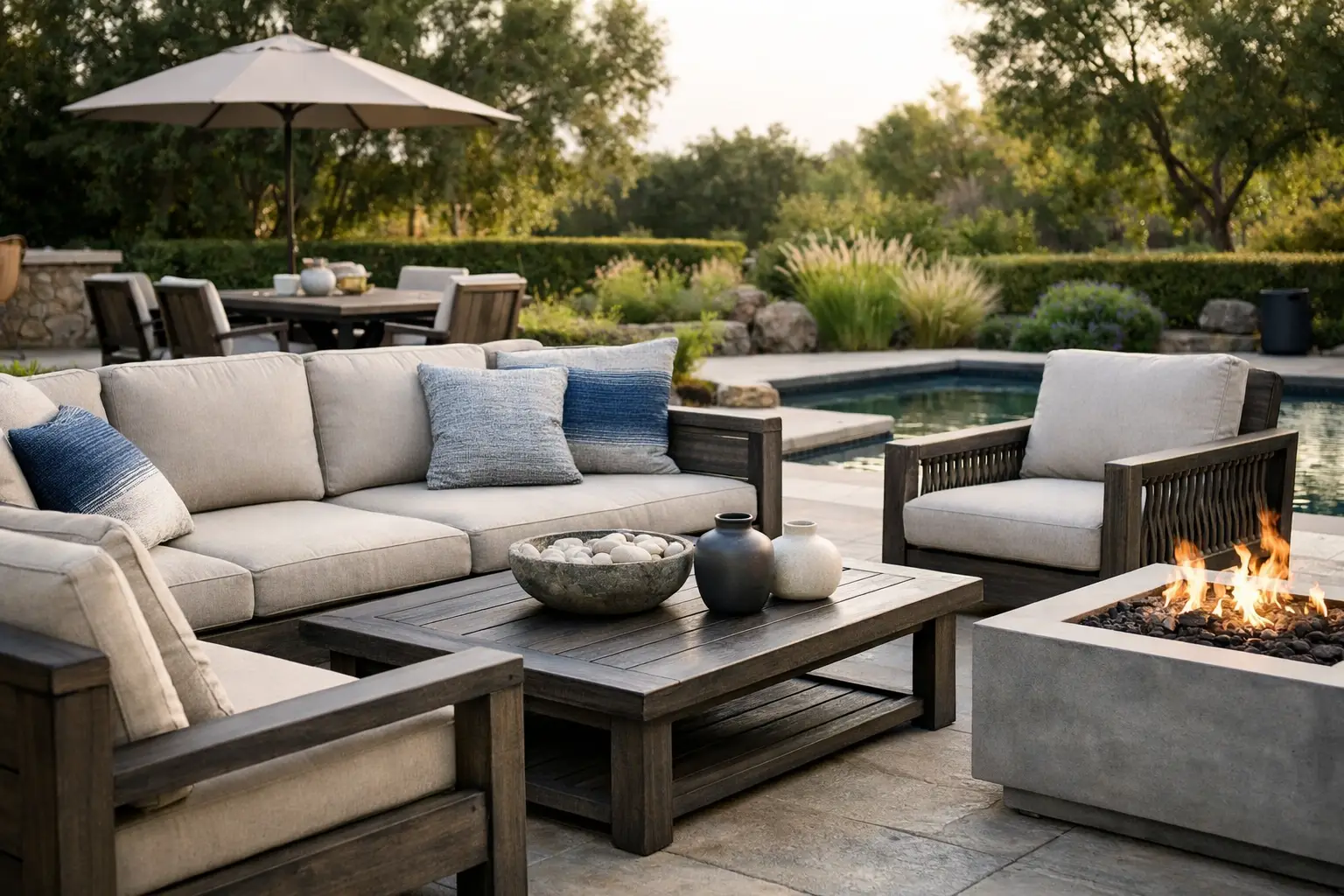
Custom finishes tend to deliver the strongest return when the project needs one of three outcomes. The first is brand alignment, especially for hotels, branded residences, and restaurants that want outdoor spaces to carry the same design language as interiors. The second is site integration, where furniture needs to relate to stone, facade materials, landscaping, or pool finishes already fixed by the architecture. The third is category unification, where multiple furniture types need to feel coherent across a large site.
That last point is often underestimated. Large outdoor projects rarely fail because one chair is unattractive. They fail when lounge, dining, shade, and accessory categories look like they were sourced from unrelated vendors. A controlled finish strategy helps create visual continuity across diverse product types without forcing every item into the same collection.
For B2B buyers, that continuity has operational benefits too. It simplifies approvals, supports phased deliveries, and makes future expansion more manageable. If phase two of a property opens six months later, the original finish framework can still guide new procurement.
Trade-offs buyers should assess early
Customization is powerful, but it is not automatic value. The right decision depends on project type, timeline, and replacement strategy.
If speed is the top priority, standard finishes may be the smarter route for a portion of the order. If the property expects heavy turnover, highly specialized fabrics or coatings can create future replenishment challenges unless the supplier documents specs carefully. If the project spans multiple sites, consistency becomes more important than pursuing a unique finish on every product line.
Buyers should also consider maintenance behavior, not just initial appearance. Matte finishes can look sophisticated and reduce glare, but some may show oils or cleaning marks more readily. Textured coatings can disguise scratches better than smooth ones, yet they may demand different cleaning methods. Light upholstery can elevate the visual tone of a space, though not every operating environment can support it equally well.
The right supplier does not push one answer across every job. They align the finish recommendation with usage intensity, climate exposure, staff capability, and replacement planning.
Why vertical integration changes the outcome
A custom finish program is only as reliable as the system behind it. When design support, manufacturing, and delivery are fragmented across separate parties, the burden shifts back to the buyer. Communication slows down, approvals get diluted, and accountability becomes harder to pin down.
A vertically integrated supplier can close those gaps. The design team can review feasibility against real production capability. The factory can standardize finish application across categories. Logistics can be planned around approved lead times instead of optimistic estimates. For procurement teams, this reduces the back-and-forth that often delays hospitality and residential outdoor projects.
This is where PNZ Space Global’s model fits the needs of specification-driven buyers. With in-house design support, 3D drawings, mock-up approvals, broad category coverage, and factory-scale production capacity, the finish conversation stays connected to execution from day one.
How to evaluate a supplier for custom-finish work
If you are sourcing a custom outdoor package, ask practical questions early. Can the supplier match the finish direction across lounge, dining, and poolside categories? Do they provide physical swatches and preproduction samples? Can they show how approvals move from design review into full production control? Can they support phased or high-volume delivery without compromising finish consistency?
You also want to understand documentation. Approved colors, materials, and construction details should be recorded clearly enough to support future reorders, replacements, and expansions. In project environments, memory is not a system. Documentation is.
It also helps to evaluate whether the supplier can support the full furnishing scope. A one-stop outdoor source reduces coordination friction, especially when your schedule includes multiple zones, changing quantities, or late-stage design adjustments. That matters as much as the finish itself.
The stronger project result
The best custom finish outdoor furniture project example is not the one with the most dramatic palette shift. It is the one where finish customization improves the project without disrupting procurement. The furniture arrives aligned with the design intent, the approved sample matches the delivered order, and the site team is not left solving preventable issues during installation.
That is the standard serious buyers should expect. A custom finish should give you more control, not more uncertainty. When the process is managed correctly, it becomes a practical tool for design consistency, brand expression, and long-term project performance.
If your next outdoor package needs more than off-the-shelf options, the right starting point is not a color chart. It is a supplier that can turn finish intent into a repeatable, documented, on-time result.