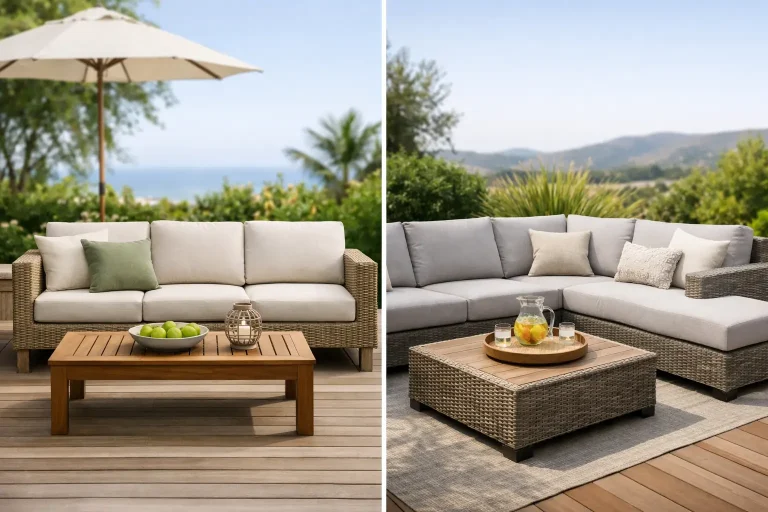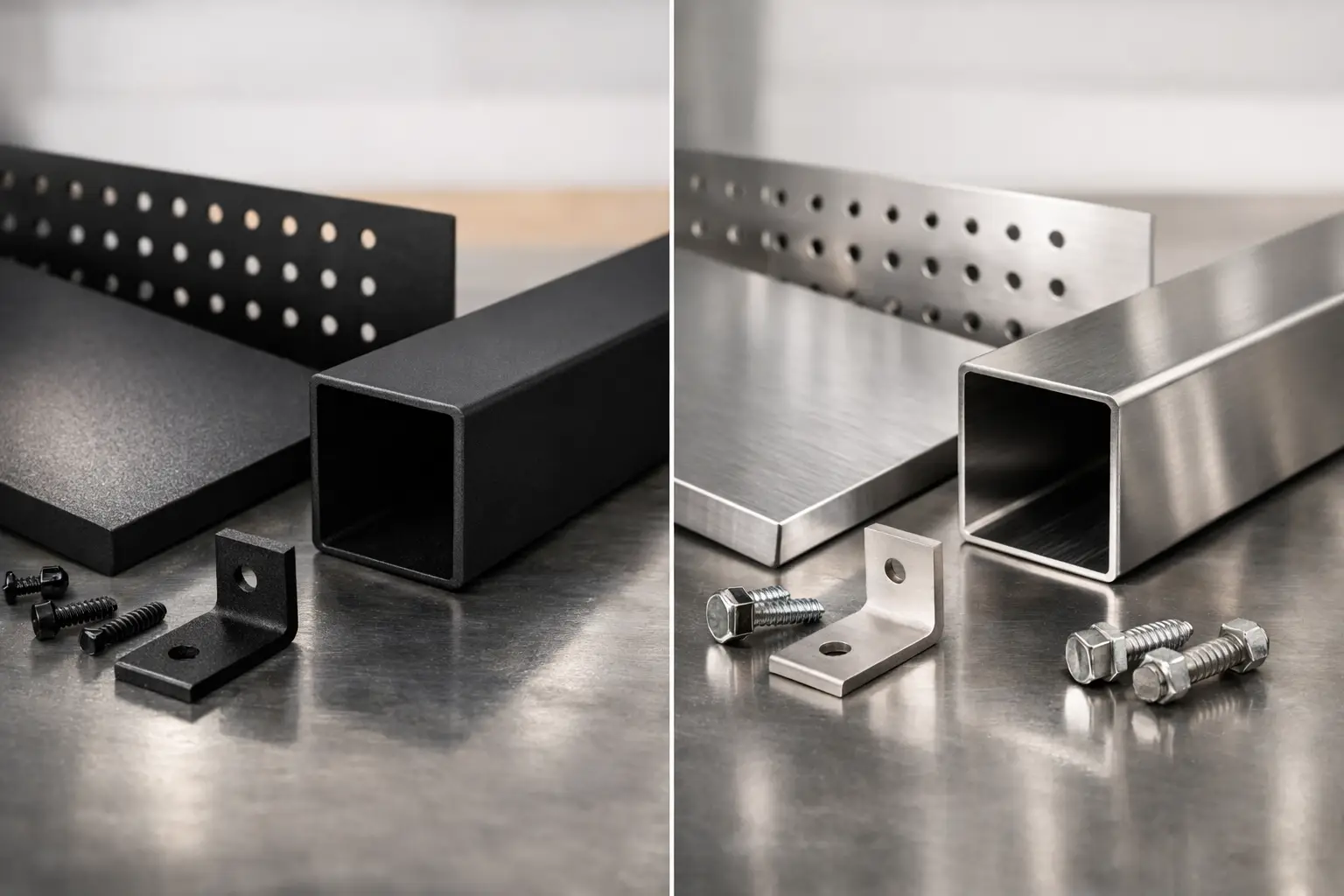
Powder Coated Aluminum vs Stainless Steel
Specify the wrong frame material for a pool deck, rooftop lounge, or beachfront terrace, and the problem shows up fast – finish breakdown, avoidable maintenance, weight issues during install, or costs that do not hold up under procurement review. When teams compare powder coated aluminum vs stainless steel, they are usually not choosing between a good option and a bad one. They are choosing between two high-performing materials that behave differently under real project conditions.
For contract outdoor furniture, that difference matters. Designers need a finish that supports the look. Procurement teams need cost control. Operators need low maintenance. Developers need consistency across multiple units or sites. The right choice depends less on marketing claims and more on location, exposure, use level, and the standard of finish required.
Powder Coated Aluminum vs Stainless Steel: The Core Difference
At a basic level, aluminum and stainless steel solve different problems.
Powder coated aluminum is typically selected for its lighter weight, corrosion resistance, design flexibility, and price efficiency across broad outdoor furniture programs. It is especially effective when a project needs volume, easier handling, and a wide finish range without pushing weight or budget too far.
Stainless steel is usually specified when a project demands higher structural strength, a more premium metal expression, or added confidence in heavy-use settings. It carries more weight, often more cost, and a different visual language. In the right setting, those are advantages, not drawbacks.
The key is to separate material performance from finish performance. Aluminum does not rust, but its powder coat can still chip or wear if the coating process is poor or the furniture takes repeated impact. Stainless steel resists corrosion very well, but not all grades perform equally in marine or chlorinated environments. Good specifications matter as much as the material itself.
Durability in Outdoor Environments
If the project is exposed to sun, humidity, rain, irrigation, salt air, or pool chemicals, both materials can work – but they do not age in the same way.
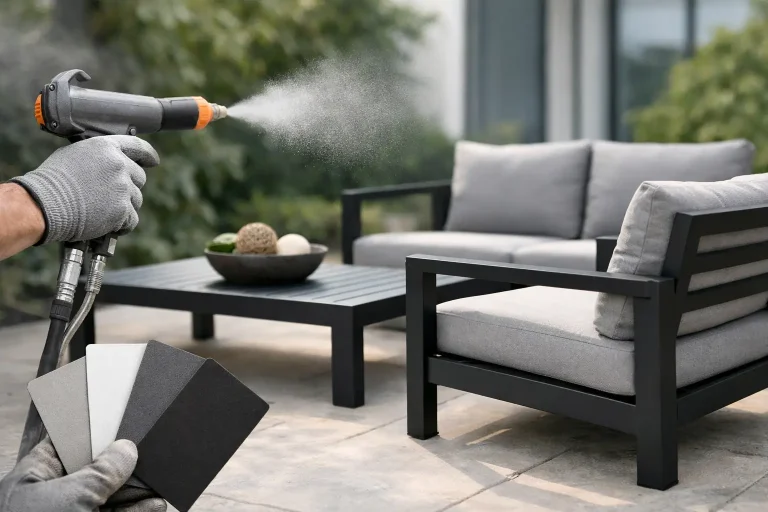
Powder coated aluminum performs very well in most outdoor applications because the base metal naturally resists corrosion. That makes it a strong fit for residential communities, hotel terraces, dining areas, and general poolside use. The powder-coated finish adds color, texture, and another layer of protection. When the pretreatment and coating process are controlled properly, the result is durable and visually clean.
Stainless steel offers excellent strength and long-term durability, particularly in furniture designs that need slimmer profiles without sacrificing stability. It can handle heavy traffic well, and it often feels more substantial in commercial settings. But stainless steel is not automatically maintenance-free. In coastal projects or areas with constant chemical exposure, grade selection and surface care become more critical. Lower-grade stainless can show tea staining or surface corrosion over time.
For many outdoor projects, aluminum gives the better balance of weather resistance and practical upkeep. For selected hospitality, luxury, or high-traffic installations, stainless steel may justify its premium.
How coastal and poolside exposure changes the decision
This is where broad generalizations stop being useful.
In inland settings with standard weather exposure, powder coated aluminum is often the more efficient choice. It delivers strong corrosion resistance, a broad design range, and easier site handling. On rooftop lounges and large terrace projects, that lower weight can also reduce installation friction.
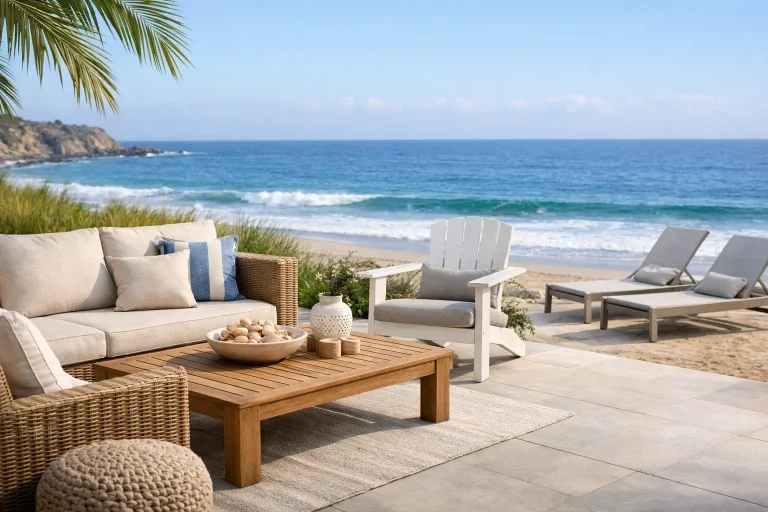
In beachfront or highly corrosive environments, the decision gets more technical. Aluminum still performs well, especially when the coating system is done correctly, but not every powder-coated product is built to the same standard. Stainless steel can also perform exceptionally well, but only if the right grade is specified for that environment. A generic stainless specification is not enough near salt air.
For poolside applications, both materials can work. The question is how much chlorinated splash, humidity, and maintenance discipline the furniture will face. A well-finished aluminum frame is often a very smart contract-grade solution here because it resists corrosion and keeps the product easier to move, clean, and reposition.
Appearance and Design Flexibility
Material choice affects the look of the entire collection.
Powder coated aluminum is far more flexible from a finish perspective. It can be produced in matte, textured, or smooth finishes across a wide color range, which helps designers align frames with upholstery, decking, facades, and brand palettes. For projects with multiple zones – dining, lounge, pool, and accessory categories – that flexibility supports cleaner visual continuity.
Stainless steel has a more specific aesthetic. It reads sharper, more architectural, and often more premium in contemporary settings. Brushed and polished finishes can be striking, especially in high-end hospitality or luxury residential environments. But it is less adaptable when a project needs softer, warmer, or more varied frame colors.
If the design intent calls for understated modern living, aluminum usually gives specifiers more room to work. If the goal is a visible metal statement, stainless steel may better support that direction.
Weight, Handling, and Installation
This category matters more in real projects than it does in showroom conversations.
Aluminum is significantly lighter than stainless steel. That affects freight, warehousing, staging, rooftop access, site movement, and day-to-day furniture handling by staff. For hospitality operators who reset layouts often, lighter frames can reduce labor strain and speed up operations. For developers furnishing multiple buildings or outdoor zones, weight can influence logistics cost at scale.
Stainless steel brings more mass and a more grounded feel. In windy locations, that can be useful, although frame design and overall product engineering are just as important as raw material weight. Heavier furniture may feel more substantial to guests, but it can also make installation and repositioning more difficult.
For high-volume procurement, aluminum often wins on operational efficiency alone.
Maintenance Expectations
Neither material should be treated as a zero-maintenance solution.
Powder coated aluminum is typically easy to maintain. Routine cleaning with mild soap and water is enough for most environments. The main risk is surface damage from impacts, abrasion, or poor handling. If the finish is chipped deeply enough, the visual issue is usually more immediate than the structural one, since aluminum itself does not rust like steel.
Stainless steel also needs cleaning, especially in outdoor commercial settings where airborne contaminants, moisture, and chemicals collect on the surface. If neglected, even quality stainless can lose its clean appearance. Fingerprints, spotting, and film buildup can be more visible on some finishes, which matters in premium installations.
From a facilities perspective, powder coated aluminum is often easier to live with across a broad furniture program.
Cost and Procurement Value
When buyers compare powder coated aluminum vs stainless steel, initial unit price is only one part of the picture.
Powder coated aluminum is generally more cost-effective, especially across larger quantities. It can support a strong contract-grade specification without pushing the budget into premium territory. That matters for developers, hospitality groups, and procurement teams balancing performance across multiple categories and sites.
Stainless steel usually comes in at a higher price point. Sometimes that premium is justified by the design intent, the perceived value, or the structural demands of the furniture line. But it should be specified with discipline. If a project does not need the extra strength, weight, or stainless appearance, the upgrade may not improve outcomes enough to justify the spend.
The better question is not which material is cheaper. It is which one delivers the right lifecycle value for the environment, use level, and brand standard.
Which Material Makes More Sense for Outdoor Furniture?
For most large-scale outdoor furniture programs, powder coated aluminum is the more versatile specification. It offers a strong combination of corrosion resistance, lower weight, finish flexibility, easier maintenance, and cost control. That is why it is widely used across dining sets, lounge seating, pool furniture, and hospitality environments.
Stainless steel makes sense when the project needs a more premium exposed-metal look, higher structural confidence in certain designs, or a heavier visual and physical presence. It can be the right move for signature areas, luxury settings, or specific commercial applications where that expression adds value.
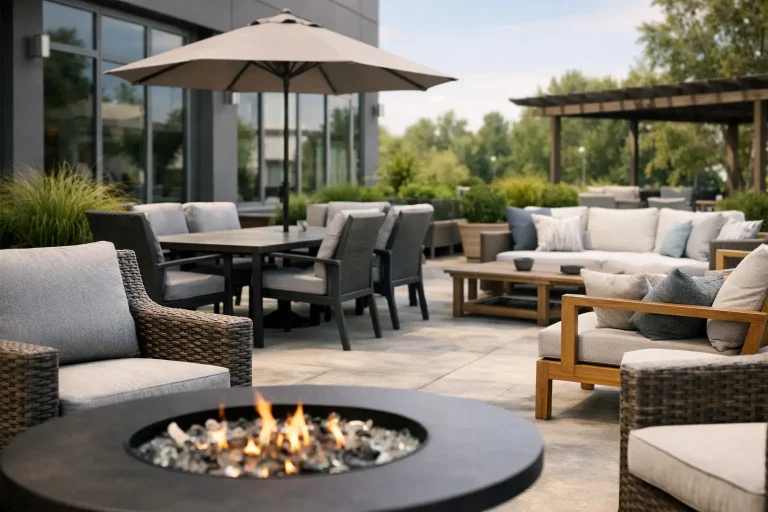
The strongest procurement decisions usually do not come from choosing one material for everything. They come from matching each material to the use case. A resort may specify powder coated aluminum across most pool and terrace zones, then reserve stainless steel for selected statement pieces or high-visibility dining areas. That is a smarter approach than forcing one answer across every setting.
At PNZ Space Global, material selection is part of a larger execution process – design support, finish alignment, mock-up review, and production control all matter if the goal is consistent project delivery at scale. The frame material is only the starting point.
If you are specifying for outdoor use, ask a practical question before you ask a stylistic one: what will this piece face every day, and what will your team realistically do to maintain it? The best material choice is the one that still looks right after the project opens.