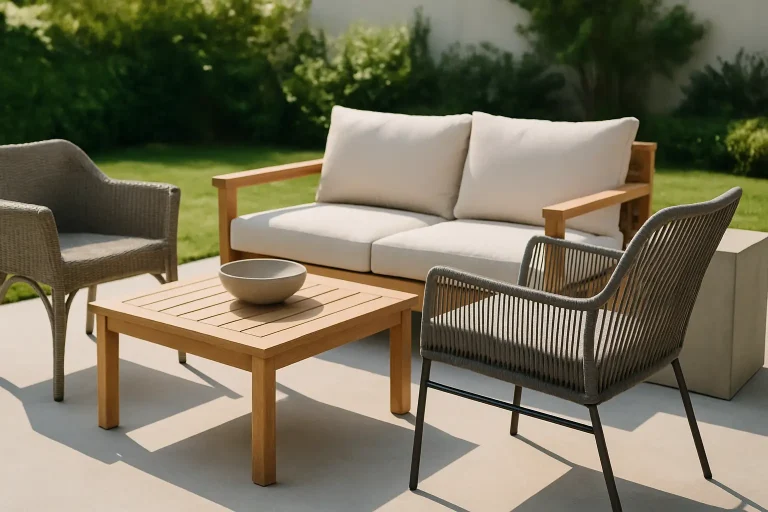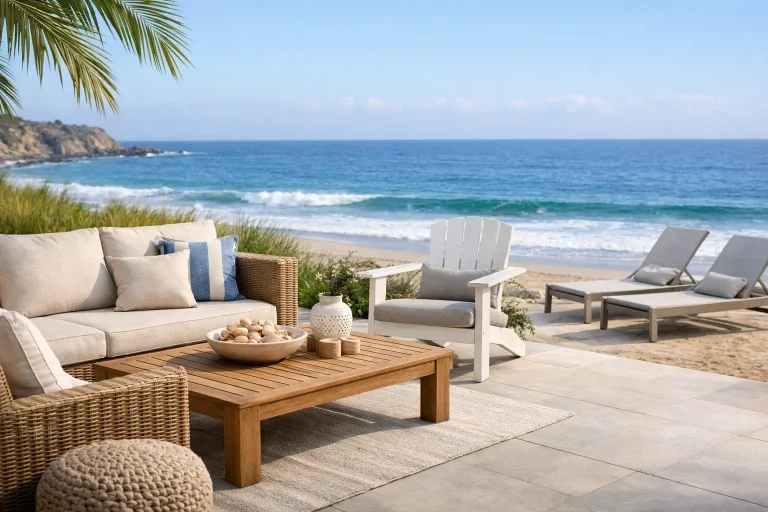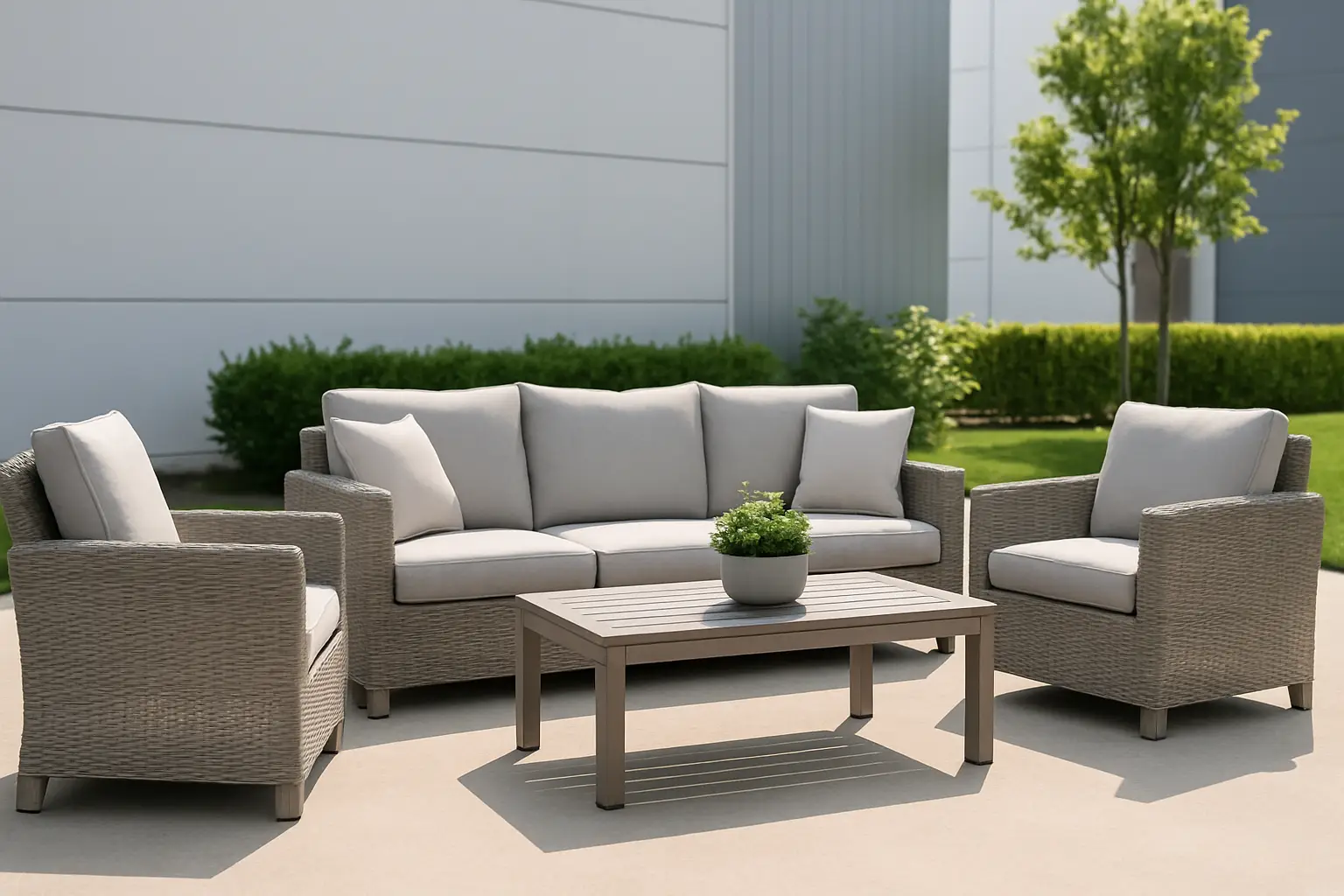
Factory Direct Outdoor Furniture That Performs
A pool deck looks finished on render day. On install day, it looks finished only if the shipment arrives complete, the finishes match, and the hardware does not loosen after a month of heat and heavy use. That is the real reason “factory direct” matters for outdoor furniture at scale. It is not a buzzword. It is a procurement strategy for controlling risk.
For designers, developers, hospitality operators, and procurement teams, buying outdoor furniture factory direct can reduce cost, shorten decision cycles, and tighten specification control. It can also create new failure points if you do not vet manufacturing capacity, quality systems, and logistics discipline the same way you would vet a contractor.
What “outdoor furniture factory direct” really means
Factory direct should mean you are buying from the organization that designs and manufactures the product – not a reseller relabeling an item from a shifting supply base. In practical terms, it shows up in four ways: you can confirm raw material choices, you can specify finishes and dimensions with fewer translation layers, you can audit quality at the source, and you can get accountable answers on lead time.
The trade-off is that factory direct puts more responsibility on the buyer. If you skip the documentation and rely on photos, you may get a container that technically matches the style but fails your spec: different weave tone, lighter aluminum wall thickness, unapproved foam density, or packaging that arrives crushed and scuffed. Factory direct is powerful only when it is paired with a professional approval process.
Why B2B buyers choose factory direct for outdoor projects
In commercial and hospitality environments, outdoor furniture is a performance material. Sun exposure, chlorine, salt air, constant cleaning, and high guest turnover create conditions that residential-grade products rarely survive. Factory direct procurement is popular because it supports contract-grade decision-making.
Pricing is the obvious advantage, but it is not the only one. The bigger value is predictability: consistent material batches, repeatable finishes, and a stable SKU library that lets you expand a property later without the “discontinued” surprise.
Factory direct also aligns with how projects actually run. When you are furnishing multiple zones – rooftop lounge, poolside, dining terrace, and cabanas – you need one specification narrative across categories. A factory partner can coordinate cushion fabrics, powder coat colors, and tabletop materials so the outdoor experience feels designed, not assembled.
Where factory direct goes wrong (and how to prevent it)
Most procurement problems are not dramatic. They are small, expensive mismatches that multiply across volume.
One common issue is specification drift. A sample arrives perfect, then production quietly substitutes a different zipper, webbing, foam density, or protective foot cap to hit a price. You do not notice until pieces are in the field and the warranty conversation starts.
Another issue is lead-time ambiguity. “45-60 days” can mean 45-60 days to start production, or 45-60 days to be ready for pickup, or 45-60 days plus port congestion plus inland trucking. If you are coordinating opening dates, soft launches, or phased handovers, you need calendar clarity, not a range.
The third issue is packaging and load planning. Outdoor furniture often ships in mixed loads: frames, cushions, tabletops, umbrellas, bases, and accessories. Without disciplined packing lists and labeling, you lose time at the receiving dock, and missing cartons become a detective story.
These problems are preventable when you treat factory direct like a controlled workflow, not a shopping experience.
A factory-direct buying process that holds up under deadlines
B2B teams move faster when the process is standardized. Factory direct works best when you lock the decisions that affect manufacturing early, then use documentation to keep everyone aligned.
Start with zone planning, not product browsing
Outdoor spaces are specified by use. A resort pool needs chaise lounges with serviceable sling or quick-dry cushions, stable side tables, and shade solutions with wind ratings appropriate to the site. A dining terrace needs chairs that are easy to move, tables that resist heat and staining, and finishes that tolerate frequent cleaning.
When you begin with zones, you can select a coherent material system across categories – aluminum and rope for lounge, matching powder coat for dining, coordinated tabletops for all food and beverage areas. This reduces the number of unique finishes to manage and improves your ability to reorder.
Demand a written specification sheet for each SKU
Photos are not specs. For factory direct outdoor furniture, the specification sheet is your contract. It should call out frame material and thickness, welding approach where relevant, powder coat system, rope or wicker fiber type, cushion construction and foam density, fabric performance requirements, and tabletop substrate and finish.
If the supplier cannot produce consistent spec sheets, assume substitutions will happen. If they can, you can approve with confidence and hold production accountable.
Use physical and visual approvals the right way
A swatch approval is useful for color and texture, but it does not validate comfort, proportions, or assembly tolerance. For higher-volume projects, a pre-production mock-up is the most efficient insurance. You confirm sit feel, seat height, arm geometry, and how cushions align after repeated use. You also verify that tables do not wobble and that adjustable feet work on real surfaces.
For remote teams, 3D drawings can accelerate alignment before samples ship. They help designers and project managers confirm footprint and circulation, which is critical for terraces with tight clearances.
Lock a packaging and labeling standard
The factory can build excellent furniture and still create chaos at delivery if cartons are mislabeled or packing lists are unclear. Ask for carton labels by zone and SKU, photo documentation of container loading, and a packing list that ties directly to your purchase order.
If you are installing across multiple areas or multiple sites, request a load plan that supports your installation sequence. It is faster to install when the container is packed for the job, not for the factory’s convenience.
What to ask a factory-direct supplier before you commit
Factory direct is not only about product. It is about operational control. If you want fewer surprises, ask questions that reveal whether the supplier runs like a project partner.
Ask where the product is made and what capacity supports it. A real manufacturing footprint and modern machinery matter because they reduce variability and keep lead times stable when volumes spike.
Ask how quality control is documented. You want to hear about incoming material checks, in-process inspections, and final QA that verifies finish consistency, assembly, and packaging integrity.
Ask how they handle customization. “Yes, we can customize” is not enough. You need minimum order quantities, finish libraries, timeline impacts, and a clear approval path for custom colors, fabrics, and dimensions.
Ask how they manage after-order changes. Projects evolve. A supplier that has an internal system for revision control will protect your timeline and reduce the risk of shipping the wrong spec.
Category decisions that affect durability and lifecycle cost
Outdoor furniture fails predictably. When you know the failure points, you can specify around them.
For lounge seating, the frame and cushion system do the heavy lifting. Aluminum is popular for corrosion resistance and weight, but wall thickness, welding quality, and powder coat system determine whether it stays rigid and clean-looking after years of use. Cushions should be engineered for drainage and recovery, not just softness on day one.
For dining, stability and cleanability are the priorities. Chairs need joint integrity and feet that do not crack under movement on textured pavers. Tabletop choices should match the environment: some surfaces excel in heat, others in stain resistance, and others in impact tolerance. The right answer depends on how the space is operated.
For poolside, materials must tolerate constant sun and water exposure. Sling systems can be efficient for maintenance, while cushion systems need fabrics and foams designed for quick drying. Shade solutions should be specified with base weights, canopy performance, and hardware quality that match wind realities.
Accessories are where projects win or lose polish. Side tables, ottomans, planters, and storage pieces should share finishes and maintain the same quality level as the hero seating. A mismatched accessory can make a premium space look value-engineered.
How factory direct supports consistent design across multiple sites
Developers and hospitality groups often furnish more than one property. The advantage of factory direct is repeatability. When the supplier owns design, manufacturing, and distribution, you can standardize SKUs, keep a documented finish library, and roll out consistent outdoor experiences across locations.
This is also where a broad catalog matters. If lounge, dining, pool, shade, and accessories are sourced from one controlled ecosystem, you spend less time reconciling color variation and more time refining the guest experience.
For teams that need a partner built for complex procurement – with contract-grade product engineering, a large and growing SKU base, and project support like 3D drawings and mock-up approvals – PNZ Space Global is structured to deliver factory-direct control with end-to-end execution.
The decision test: when factory direct is the right move
Outdoor furniture factory direct is the right move when you have one or more of these pressures: high volume, tight timelines, multi-zone consistency requirements, or customization needs. It is also the right move when you are accountable for performance after opening day, not just for a good-looking install.
If your project is small and flexible, a local stocked option can be faster. If your timeline cannot absorb a sampling and approval cycle, factory direct may not fit. The best procurement plans are honest about constraints.
Factory direct works when you use it as a control system: clear specs, disciplined approvals, documented QA, and logistics that treat delivery as part of the product.
Choose the partner that can prove those controls exist, then let your design intent survive contact with the real world – sun, water, guests, and time.