Outdoor Furniture That Holds Up in Hospitality
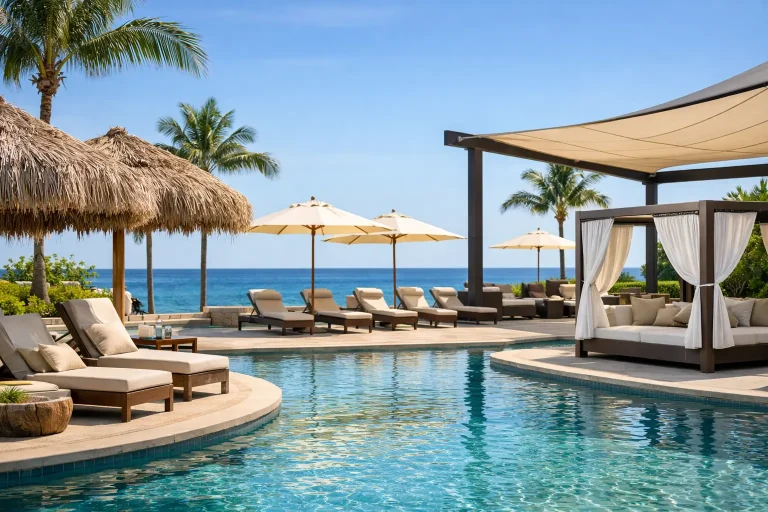
A pool deck looks finished on rendering day. In real life, it gets punished by chlorine mist, sunscreen, dragging loungers, and daily wipe-downs that strip weak finishes fast. Hospitality outdoor spaces do not fail because they lack style – they fail because the furniture specification did not match the operating rhythm.
If you are sourcing outdoor furniture for hospitality projects, you are not buying “patio sets.” You are building an environment that has to photograph well, meet brand standards, and keep performing through peak season with minimal downtime. That means making decisions like a procurement lead and a designer at the same time: choose the right materials, control SKUs, lock lead times, and plan for replacement cycles.
What “contract-grade” really means outside
In hospitality, the outdoor area is an extension of revenue. Seats are inventory. When furniture breaks, wobbles, fades, or stains, it is not a cosmetic issue – it is lost cover count, extra labor, and a guest experience problem.
Contract-grade outside comes down to four realities. First, UV exposure is relentless, especially in coastal and high-sun markets. Second, moisture shows up in multiple forms: rain, humidity, pool chemicals, salt air, and aggressive cleaning. Third, furniture is handled constantly by staff and guests, so joints and fasteners take repeated stress. Fourth, standard residential warranties and materials rarely align with commercial use.
This is where “it depends” matters. A covered terrace in a temperate climate can tolerate softer material choices than an uncovered rooftop with wind, sun, and dust. A fine-dining patio prioritizes comfort, quiet movement, and elevated finishes, while a pool club prioritizes stackability, fast drainage, and wipe-clean surfaces. The point is not to overbuild everything – it is to specify with precision.
Start with the site conditions, not the mood board
Most outdoor failures trace back to one of two gaps: the environment was underestimated, or operations were not considered.
Sun path and heat load determine whether powder coat and fabrics maintain color, whether tabletops get too hot to touch, and whether cushions need a higher-performance textile. Wind exposure affects chair stability, umbrella engineering, and whether lighter pieces become a daily headache for staff. Proximity to water tells you how serious corrosion protection must be, and whether you should avoid certain metals entirely.
Operations are just as defining. If the venue flips tables quickly, you need dining chairs that move quietly, resist scuffs, and do not loosen at the joints. If the space is reconfigured for events, you need stackable or easily nested product and a storage plan. If housekeeping uses strong chemicals, you need finishes and textiles that can handle repeated cleaning without dulling.
Material choices that perform under hospitality use
Material selection is where budgets get protected or burned. The best choice is rarely the most expensive across every category, but it is almost always the most appropriate for the conditions.
Aluminum is often the workhorse for hospitality because it is lightweight, corrosion-resistant when properly finished, and easy to move for daily operations. The trade-off is that thin-gauge aluminum or weak welds will show fatigue faster in high-traffic environments, so the build quality matters as much as the material.
Stainless steel can be a statement, especially for modern luxury rooftops, but it requires correct grade selection and finishing. In marine environments, the wrong grade will pit and stain. Stainless also adds weight, which can be helpful in wind but can slow down staff.
All-weather wicker (synthetic weave) works well for lounge settings and can deliver a warm, residential feel at a commercial scale. The difference is in the weave quality, UV stabilization, and the frame underneath. If the internal frame is not protected, the look can survive while the structure fails.
Teak and other hardwoods signal resort luxury, and they can last for years, but they require a clear stance on patina and maintenance. If the operator expects “same-color teak forever,” that is not how real wood behaves outdoors. If the brand embraces natural aging, teak can be a strong long-term asset.
For tabletops, sintered stone, ceramic, and certain compact laminates can offer strong scratch resistance and stability. Natural stone can be beautiful, but weight, sealing, and chipping risk need to be accounted for, especially in high-turnover dining.
The procurement-friendly way to specify by zone
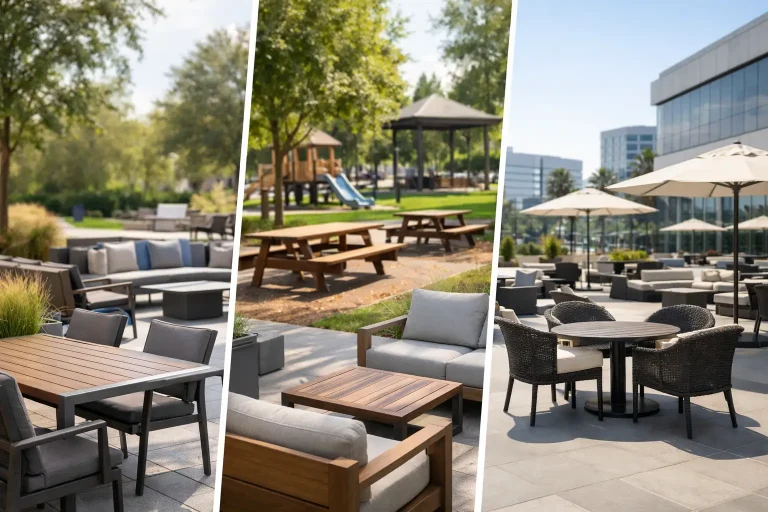
Hospitality outdoor areas usually break into repeatable zones. When you specify by zone, you simplify procurement and reduce the risk of mismatched performance.
Lounge seating for lobbies, terraces, and rooftops
Lounge areas need deep comfort, but they also need recoverability. Look for cushion constructions that drain and dry quickly, and select textiles that resist fading and staining. Think through how often cushions will be left out overnight and whether staff will realistically store them.
Modular lounge configurations can help designers create scale and flexibility, but you need disciplined SKU control. Too many modules, too many fabrics, and too many finish combinations can explode lead times and complicate replacements.
Dining for restaurants and all-day venues
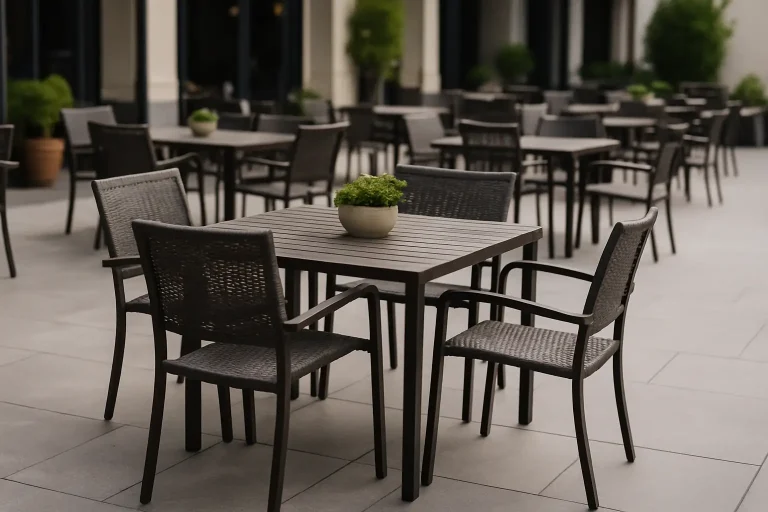
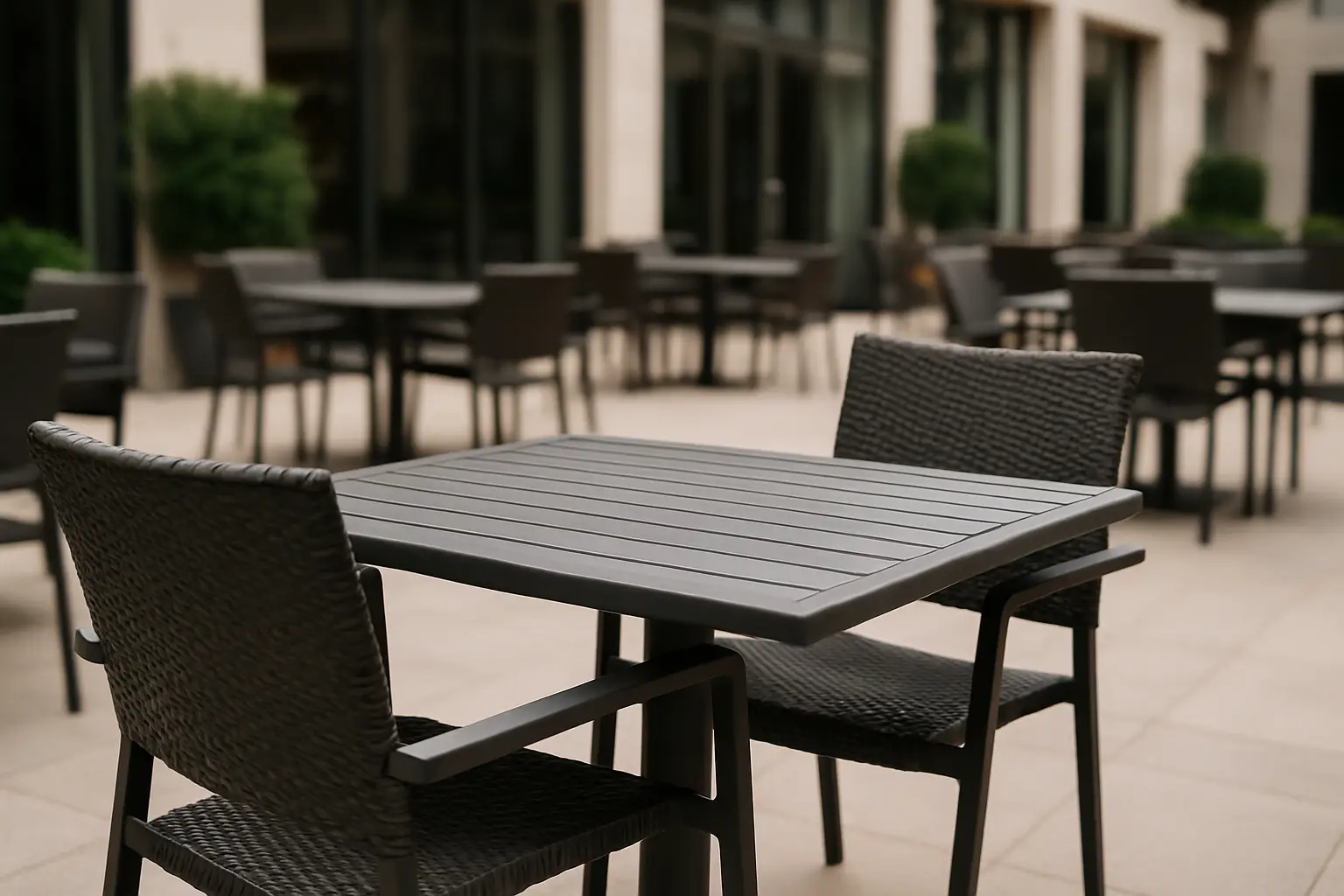
Dining is about ergonomics and durability, but also about table math. Chair width affects your count. Table base selection affects legroom and stability. A slightly wider chair can reduce capacity, while a light table can become a constant reset problem.
Stackability is valuable, but not always. In premium dining, a non-stack chair can feel more substantial and upscale. If you choose non-stack, plan a storage and cleaning workflow that does not damage frames and finishes.
Poolside furniture that survives chemicals and heat
Pool environments punish everything. Loungers should be designed for repeated movement and have wheels that do not seize. Sling materials can reduce cushion labor, while cushions can elevate the experience if the operation can manage them.
Prioritize surfaces that clean fast and do not trap water. The best pool deck is the one staff can reset quickly without fighting mildew, rust, or sticky finishes.
Shade solutions that do more than look good
Umbrellas and pergolas are not accessories in hospitality – they are comfort infrastructure. Wind rating, base engineering, canopy fabric, and replacement canopy availability all matter.
If the property is exposed, consider fewer, better-engineered shade units rather than many lightweight umbrellas that become maintenance issues. Also consider how shade interacts with lighting, signage, and circulation so you do not solve sun exposure but create operational friction.
Specification control: the quiet driver of project success
Design intent gets approved quickly. Specifications are what keep the project on track.
Lock down finish codes, fabric codes, and cushion details early. Confirm whether the furniture will be exposed year-round, whether covers are planned, and what the cleaning protocol is. Ask for material samples and review them under the actual site lighting – outdoor colors shift dramatically between midday sun and nighttime hospitality lighting.
Replacement strategy is another overlooked piece. In hospitality, you should expect some loss and wear. A smart spec includes a plan for reorderability: same SKU, same finish, same fabric, or at least a controlled substitution path that does not force a full refresh.
Lead times, logistics, and why vertical integration matters
A great outdoor package that arrives late is not a great package.
Hospitality schedules are unforgiving: opening dates, seasonal peaks, and marketing launches do not move easily. This is why operational control – not just design range – becomes a deciding factor in supplier selection.
When design, manufacturing, and distribution are coordinated under one roof, you reduce handoffs that typically create delays. It also simplifies quality assurance because the same team owns frame construction, finishing, upholstery, packing standards, and shipment readiness.
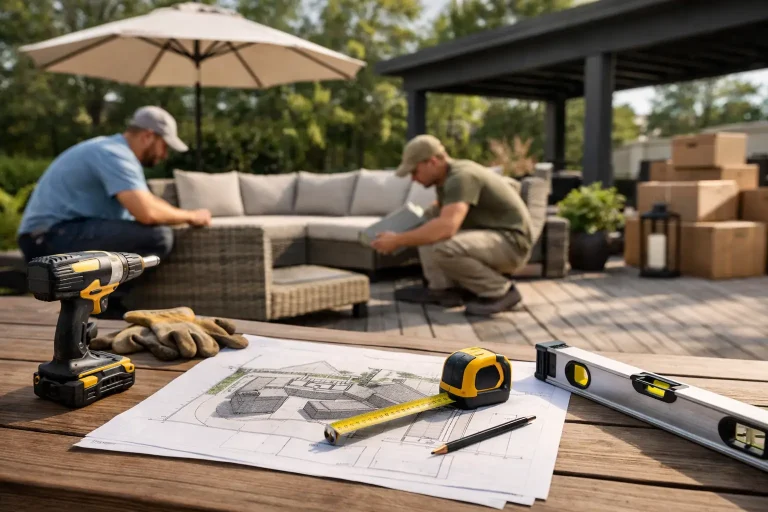
For projects that require approvals, mock-ups and 3D drawings can prevent costly mistakes. A physical sample chair or a mock-up setting on a key terrace can surface issues that drawings cannot: comfort, seat height, table clearance, and how finishes read in real sun.
Teams sourcing at scale also benefit from clear packaging plans and installation support. White-glove delivery matters when you are furnishing rooftops, resorts, or multi-site rollouts where damage risk and staging complexity go up.
How to avoid the most common outdoor mistakes
The biggest mistakes are predictable, which is good news.
One is specifying residential-grade furniture because it “looks the same.” It might, for a month. Then finishes chalk, frames loosen, and fabrics fade. Another is mixing too many one-off designs and fabrics, which creates ordering complexity and makes replacements painful. A third is ignoring environmental exposure until the punch list, when you realize the umbrella base is not heavy enough, or the cushion fabric is not suited to pool chemicals.
The fix is simple but not always easy: treat outdoor like a core scope, not a styling add-on. Bring procurement discipline into the design phase, and bring design discipline into procurement.
A supplier model built for hospitality timelines
For B2B buyers, the ideal outdoor partner is the one who can support the full chain: selection, specification, visualization, approval, production, delivery, and follow-on replenishment.
That is the model behind PNZ Space Global: a vertically integrated outdoor furniture supplier with an in-house design studio for 3D drawings and mock-up support, a broad contract-grade catalog across lounge, dining, poolside, shade, and accessories, and the manufacturing footprint to fulfill high-volume hospitality orders on a reliable schedule.
The outcome you are aiming for is not “nice furniture.” It is an outdoor program that stays guest-ready with less maintenance, fewer surprises, and faster project closeout.
Closing thought: if you want outdoor spaces that keep earning their square footage, specify like an operator, design like a brand, and choose partners who can prove they will deliver the same way you plan to run the property.