Weatherproof Outdoor Cushions for Hotels
A pool deck can look fully specified on paper and still fail in the first season because of one soft-good decision. Sun-faded seat pads, foam that holds water after a rinse cycle, and covers that wrinkle or mildew under heavy turnover create an immediate operations problem. For hospitality teams, weatherproof outdoor cushions for hotels are not a finishing touch. They are a performance item that affects guest comfort, housekeeping speed, replacement cycles, and the visual standard of the property.
Hotels ask more from outdoor cushions than most commercial settings. A residential-grade cushion may survive occasional weekend use, but hospitality traffic is daily, varied, and unforgiving. Guests move pieces, towels stay damp, sunscreen transfers to fabric, and poolside staff need materials that recover quickly between services. The right cushion program supports the design intent while protecting procurement budgets and reducing maintenance friction.
Why weatherproof outdoor cushions for hotels matter at the specification stage
Cushions are often evaluated late, after frames, finishes, and layouts are approved. That is usually where avoidable cost enters the project. If the cushion construction is not aligned with the climate, guest profile, and service model, the property pays for it later through early replacement, inconsistent appearance, and extra labor.
For hotels, the specification decision should start with use case. A shaded terrace attached to an all-day dining venue does not face the same exposure as a beachfront lounge deck or a rooftop with direct afternoon sun. The right answer depends on UV intensity, moisture exposure, cleaning frequency, and whether the seating needs to remain set overnight or be stored daily.
This is where contract-grade sourcing matters. Hotels do not need generic outdoor cushions. They need a cushion program engineered around occupancy, environment, and operations, with repeatable quality across multiple seating categories.
What makes a cushion truly weatherproof
Not every outdoor cushion marketed as weather-resistant is built for hospitality. The difference usually comes down to the full construction, not a single material claim. Fabric, foam, liner, stitching, zippers, and pattern fit all need to work together.
Fabric performance
The outer fabric carries the visible design language, but it also takes the most abuse. For hotels, solution-dyed acrylic and other high-performance outdoor textiles are often the strongest choice because the color is built into the fiber rather than applied to the surface. That helps reduce fading in high-UV environments and supports a cleaner appearance over time.
That said, fabric selection is rarely one-size-fits-all. A highly textured weave may look elevated in a resort lounge setting, but it can trap debris and slow cleaning. A smoother hand can be easier for housekeeping teams to wipe down, even if it offers a less residential feel. Procurement teams should weigh aesthetic goals against maintenance reality.
Foam and fill
This is where many cushion programs succeed or fail. Standard foam can hold moisture and take too long to dry, especially in poolside applications. Reticulated quick-dry foam is typically the better fit for exposed hospitality settings because its open-cell structure allows water to pass through rather than remain trapped inside.
The trade-off is cost. Quick-dry foam is usually more expensive up front, but in high-use commercial environments it often pays back through faster recovery, lower odor risk, and fewer complaints about damp seating. For covered outdoor areas, a layered fill strategy may still be appropriate if comfort is the top priority and weather exposure is limited.
Construction details
A weatherproof cushion is not just fabric over foam. Seam placement, thread quality, zipper protection, venting, and internal liners all influence service life. Poorly placed seams can wear faster under repeated guest movement. Low-grade zippers corrode. Inadequate venting can leave cushions misshapen or slow to dry.
For hotels managing multiple zones, consistency matters as much as technical performance. Cushions should fit the furniture frame precisely, hold their profile through repeated use, and arrive with the same standard across all units. That is easier to control when manufacturing and quality checks are integrated rather than spread across disconnected vendors.
Matching cushion specs to hotel zones
A single property may need several cushion specifications, even if the design language remains consistent. Treating every outdoor area the same often leads to overbuilding in some zones and underperforming in others.
Poolside and beachfront
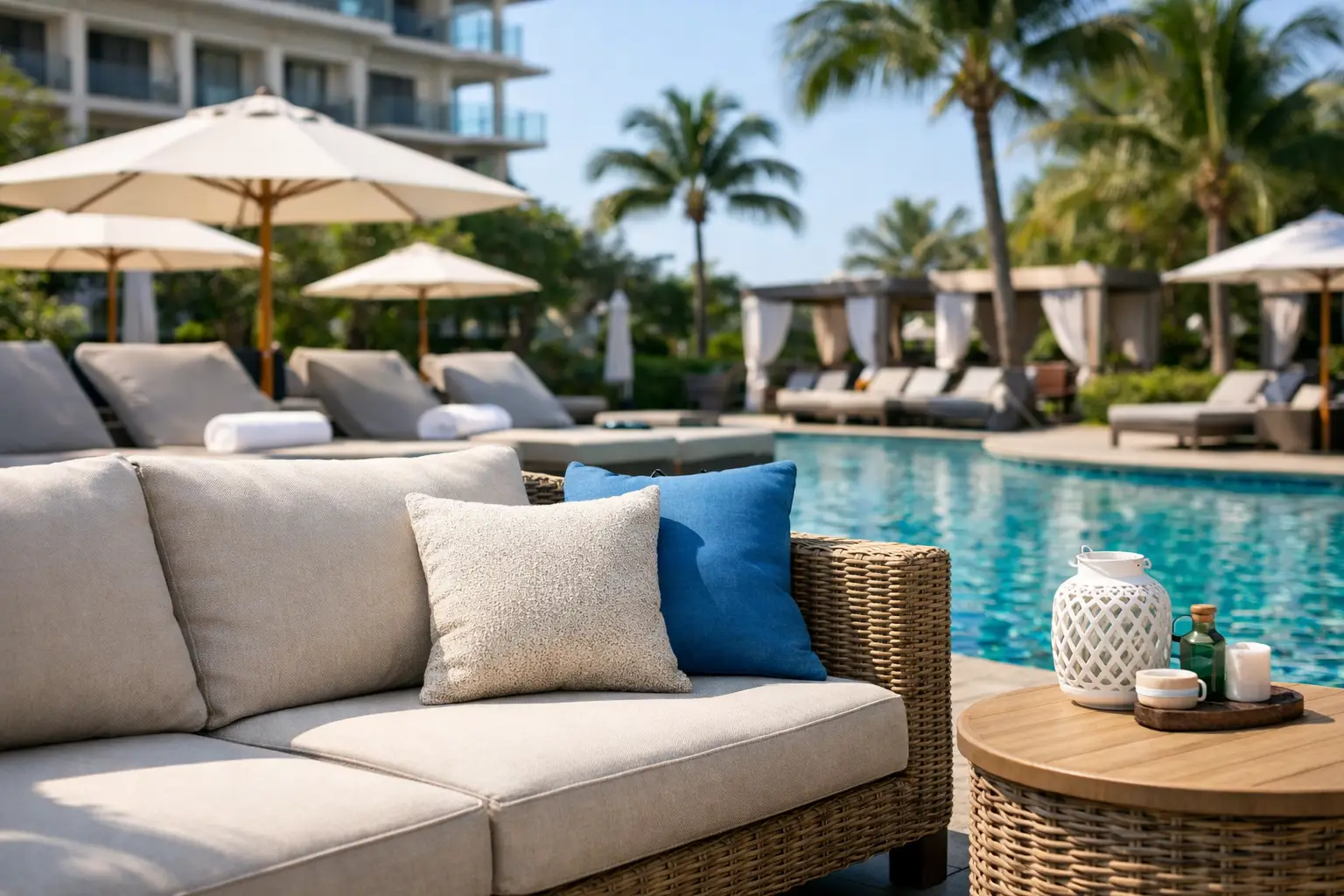
These are the most demanding environments. Cushions here need fast drainage, high UV resistance, and fabrics that can handle chlorine, salt, sunscreen, and frequent cleaning. Lighter colors may align with a resort palette, but they also show staining more quickly. In high-turnover pool settings, mid-tone neutrals often offer a better operational balance.
Rooftop lounges
Rooftops combine design visibility with environmental exposure. Wind can stress attachments and cushion placement, while direct sun can quickly reveal material weakness. Here, tailored fit and colorfastness matter as much as comfort. If the venue transitions from day to night service, the cushions also need to maintain a polished look through long operating hours.
Outdoor dining
Dining cushions usually require a different performance profile than lounge seating. The emphasis is less on deep softness and more on shape retention, stain resistance, and fast reset between seatings. Removable covers can be useful, but only if the housekeeping process supports them. If not, simple wipe-clean performance may be the smarter specification.
Design still matters – but it must work at scale
Hospitality buyers are not choosing between performance and appearance. They need both, across dozens or hundreds of units. The challenge is maintaining design intent while controlling lead times, approvals, and repeatability.
That is why customization should be structured, not improvised. Fabric selections, welt details, fastening methods, and cushion thickness should be reviewed against the actual operating environment before approval. Mock-ups and material swatches are valuable because they expose issues early, when changes are still manageable.
For designers and procurement teams, the best supplier relationship is one that reduces decision risk. That means access to clear product taxonomy, material flexibility, and practical consultation on where premium specs are justified and where standardization creates efficiency. In large hotel projects, this balance is what keeps design ambitions aligned with execution.
Common mistakes buyers make with weatherproof outdoor cushions for hotels
The most common error is buying to an appearance standard only. A beautiful fabric story means little if the cushions absorb water, fade unevenly, or lose shape after a busy quarter. Another mistake is assuming every outdoor area needs the same construction. Exposure levels vary, and so should the spec.
Buyers also underestimate replacement complexity. If a hotel sources frames from one vendor and cushions from another, future replenishment can become slow and inconsistent. Slight changes in dimensions, foam density, or fabric lots can make the property look patched rather than maintained. A more controlled sourcing model simplifies replenishment and supports visual consistency over time.
There is also the issue of logistics. Cushions are bulky, timing-sensitive, and often tied to installation schedules. Delays at this stage can hold up entire outdoor areas. Suppliers with vertical integration, in-house design support, and project fulfillment discipline are better positioned to manage approvals, production, and delivery without fragmentation.
What procurement teams should ask before approving a cushion program
The right questions are practical. What foam type is being used, and how quickly does it recover after rain or cleaning? Is the fabric appropriate for direct sun, salt air, or chlorine exposure? Are covers removable, and if so, does that align with the hotel’s housekeeping capacity? Can the supplier maintain specification consistency for future top-up orders or multi-site rollouts?
It is also worth asking how the cushion program fits into the broader furniture package. Hotels rarely buy cushions in isolation. They are specifying lounge seating, dining, pool furniture, and accessories together, often under tight timelines. A one-source approach can reduce procurement friction, particularly when design services, mock-up approvals, and logistics are built into the process. For B2B hospitality projects, that operational control is often as valuable as the product itself.
PNZ Space Global approaches these projects with that full-scope mindset – supporting specification, customization, production, and delivery across outdoor categories rather than treating cushions as a disconnected add-on.
The real value is fewer problems after opening
Well-specified cushions do not call attention to themselves. They stay dry enough to return to service quickly, hold their shape through high guest turnover, and continue to support the visual standard set at launch. That stability protects both the guest experience and the operating budget.
For hotels, the goal is not simply to buy outdoor cushions that can survive the weather. It is to choose a cushion system that performs under hospitality conditions, fits the property’s design language, and can be delivered with the same consistency as the rest of the outdoor package. When that happens, the outdoor space feels easy to operate – and guests notice the result even if they never think about the cushions themselves.