Contract Outdoor Furniture Buying Guide
A rooftop lounge that looks sharp at handover can turn into a warranty problem within one summer if the furniture was specified like residential product for a commercial job. That is why a contract outdoor furniture buying guide matters at the front end of procurement, not after cushions fade, frames corrode, or lead times start slipping. For developers, hospitality operators, architects, and procurement teams, the right buy is not just about style – it is about lifecycle cost, specification control, and execution at scale.
What a contract outdoor furniture buying guide should solve
Commercial outdoor furnishing decisions usually fail in predictable places. The product photographs well, but the material is wrong for pool chemicals. The frame is acceptable, but replacement parts are not available. The lounge chairs fit the concept board, but not the stacking, storage, or maintenance plan. A strong contract outdoor furniture buying guide should help buyers filter products by performance, operational fit, and supplier capability before final approval.
That means evaluating more than silhouette and finish. You are buying for repeated use, weather exposure, staff handling, and often compressed project schedules. In hospitality and multi-unit residential work, a chair is not one chair. It is 80, 200, or 800 units that need to arrive consistent, approved, and installation-ready.
Start with the site, not the catalog
The fastest way to mis-spec outdoor furniture is to choose from aesthetics first and site conditions second. Outdoor projects across villas, resorts, restaurants, rooftops, and pool decks place very different demands on the same category.
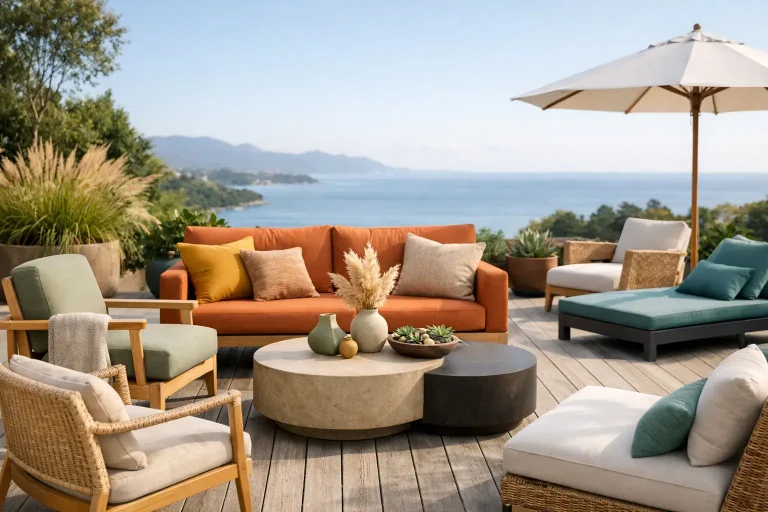
A beachfront terrace faces salt air, high UV exposure, and frequent cleaning. A shaded courtyard may prioritize style range and upholstery flexibility over extreme corrosion resistance. A poolside environment introduces sunscreen, chlorinated water, and constant moisture. A restaurant patio needs furniture that is easy for staff to move, clean, and reset between services.
Before reviewing collections, define the exposure level, traffic pattern, cleaning routine, and storage realities. Buyers who do this early make better trade-offs. They do not overpay for performance they do not need, and they avoid underbuying for aggressive environments.
Evaluate materials by use case
Material selection is where contract buyers protect the budget long term. Not every outdoor-grade material performs the same way under commercial use, and not every premium material is necessary for every zone.
Aluminum remains a strong contract choice because it is lightweight, corrosion-resistant, and practical for high-turn environments. It is especially effective where teams need to move product regularly or where rooftop weight matters. The catch is build quality. Thin-gauge aluminum may reduce upfront cost but can disappoint under heavy use.
Teak and other hardwood looks bring warmth and strong design value, particularly in hospitality settings. They can age beautifully, but they also require a clear maintenance position. If the operator wants a weathered patina, that is one path. If they expect the original tone, they need a care plan and labor commitment.
Synthetic wicker still works well in the right applications, especially where a softer residential feel is part of the brief. The difference is in fiber quality, weave consistency, and frame construction. For high-volume commercial use, the look only works if the structure underneath is engineered for it.
Outdoor upholstery and foam deserve the same scrutiny as frames. Fast-dry foam, UV-resistant fabrics, removable covers, and stain performance all affect operating cost. The wrong cushion spec can create ongoing replacement cycles that erase any initial savings.
Buy by category, but specify by function
Most projects are sourced across lounge, dining, pool, shade, and accessories. That catalog logic is useful, but procurement gets sharper when each category is broken down by function.
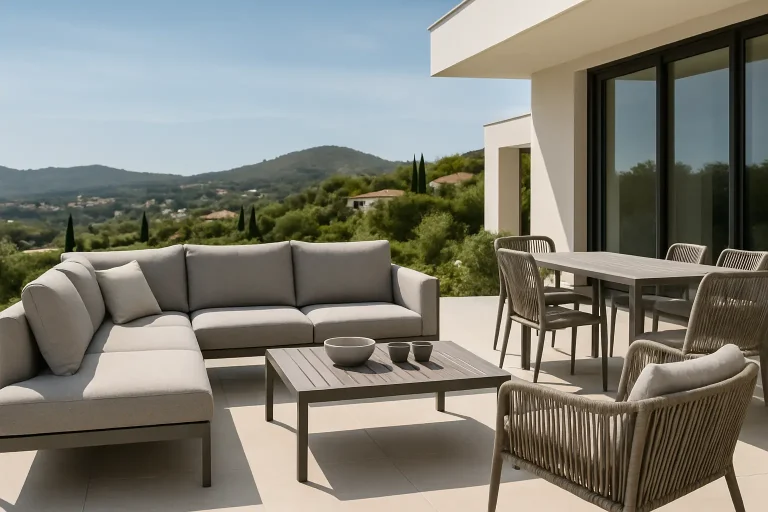
In lounge settings, seat depth, cushion profile, and module flexibility matter more than trend-driven form. A resort may need deep comfort and generous proportions. A corporate terrace may need a more upright sit that supports shorter dwell times and easier circulation.
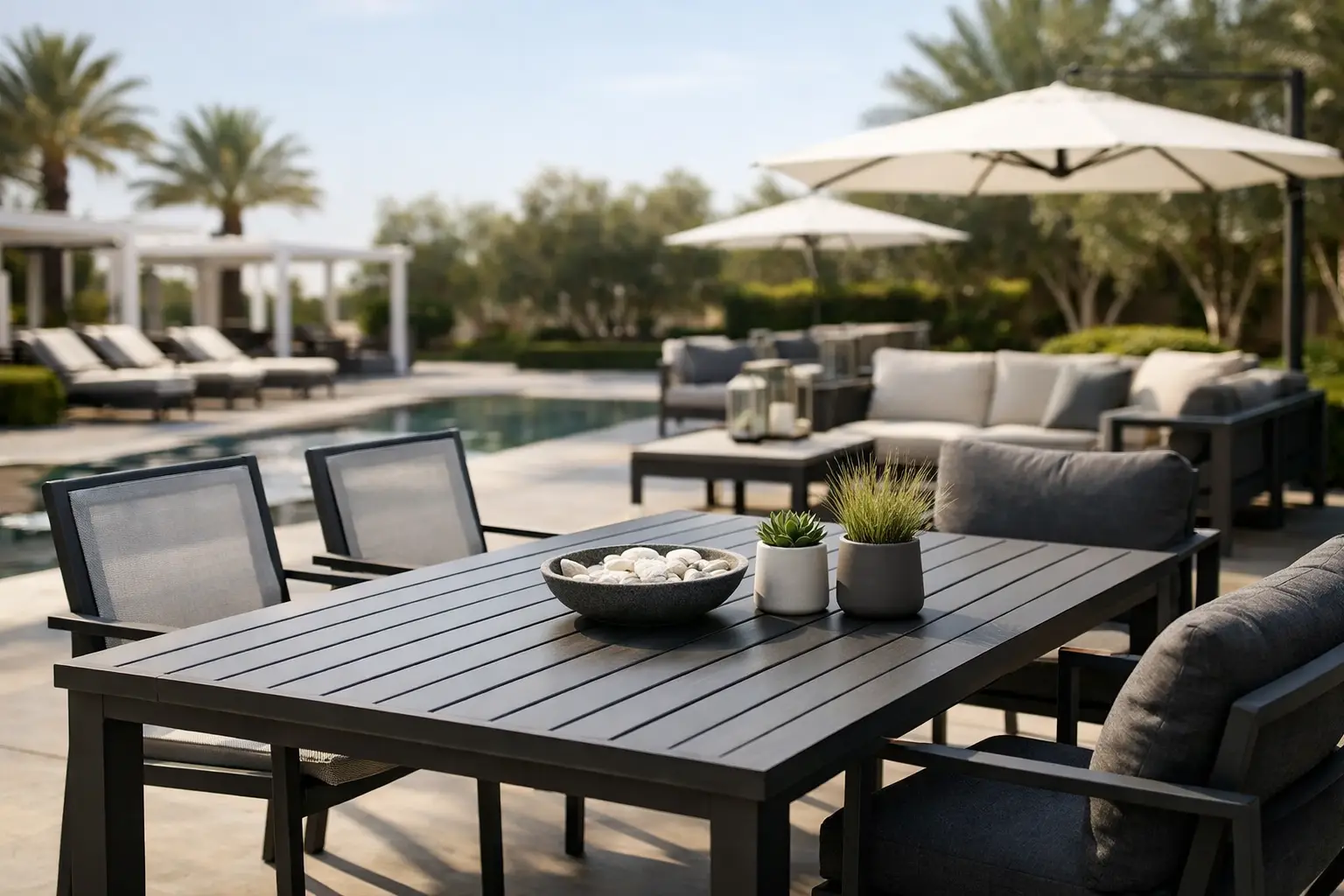
Dining requires close attention to table base stability, chair stackability, cleaning speed, and footprint efficiency. A beautiful dining chair that slows daily resets will frustrate operations within weeks.
Poolside furniture has its own checklist. Sun loungers should be easy to reposition, simple to clean, and stable on wet surfaces. Side tables need weather durability and enough weight to resist wind without becoming difficult for staff to move.
Shade is often treated as an add-on, but it changes how outdoor furniture performs. Umbrellas, pergolas, and related solutions influence material aging, user comfort, and layout viability. If shade planning happens late, furniture selection usually has to compensate.
Supplier capability is part of the product
For contract buyers, the furniture is only half of the purchase. The supplier’s production control, quality process, and delivery discipline affect whether the project lands on time and on spec.
This is where vertically integrated partners create real value. When design, manufacturing, and distribution are aligned, buyers get faster approvals, tighter consistency, and fewer handoff failures. If 3D drawings, mock-up approvals, finish confirmation, and logistics are all managed through one operating structure, procurement friction drops.
Ask practical questions. Can the supplier support custom dimensions or finish revisions? Can they deliver swatches and technical details early enough for consultant review? Can they hold consistency across large quantities and phased shipments? Can they support white-glove delivery or installation coordination when the job requires it?
A broad SKU base also matters. Buyers often prefer a single vendor not because it is simpler on paper, but because it reduces mismatch risk across dining, lounge, pool, and accessory categories. It also makes replenishment easier later.
Lead times, mock-ups, and approvals
Outdoor furniture procurement often gets squeezed between design sign-off and opening deadlines. That is exactly why approval stages should be built into the buying plan from day one.
Mock-ups are especially useful for hospitality and branded environments. They expose issues that renderings cannot – seat height, finish tone under daylight, table proportions, cushion density, and overall visual weight in the space. A mock-up may add a step, but it often removes far more expensive corrections later.
Lead time should be discussed in layers. There is sampling time, production time, shipping time, customs time, and installation readiness. The cheapest quote can become the most expensive if it ignores any one of those layers. Reliable vendors do not just offer a date. They explain the path to that date.
Cost should be measured over the project lifecycle
Price per piece is only one procurement metric. Contract buyers should look at installed cost, maintenance burden, expected replacement cycle, and after-sales support.
A lower-cost chair that needs early refinishing, frequent part replacement, or full swap-out after two seasons is not a value buy. On the other hand, a premium specification can also be excessive if the application is low traffic and partially sheltered. Good buying is not about always choosing the highest grade. It is about matching specification to exposure and use.
This is where a one-stop supplier can create efficiency beyond product pricing. Consolidated sourcing, coordinated logistics, and aligned approvals can reduce internal labor, shorten procurement cycles, and limit site-level complications.
Questions every buyer should answer before issuing a PO
Before final purchase, the team should be aligned on five things: where the furniture will be used, how often it will be used, who will maintain it, what degree of customization is required, and how fixed the opening date really is. Those answers shape the right recommendation more than any trend report.
For high-visibility projects, it is also smart to confirm replacement strategy in advance. If a finish is discontinued or a fabric changes later, can the supplier maintain continuity? That matters for phased developments, resorts with ongoing expansion, and operators standardizing across multiple sites.
A smarter way to buy at scale
The strongest contract outdoor furniture buying guide is not a style document. It is a risk-control document that protects design intent while keeping procurement practical. Buyers who treat outdoor furniture as a performance category tend to get better results – fewer delays, fewer site issues, and stronger long-term value.
For teams furnishing large outdoor environments, the best partner is rarely the one with the loudest product story. It is the one that can move from concept to approval to delivery with consistency, speed, and specification discipline. That is where a vertically integrated supplier such as PNZ Space can make a measurable difference.
If you are specifying for a terrace, resort, pool deck, or multi-site hospitality rollout, slow down just long enough to ask the harder questions before you place the order. The right furniture should look right on opening day. It should still be the right choice long after the first season ends.