How Long Does Outdoor Furniture Last Commercially?
A rooftop lounge that looks sharp on opening day can look tired far sooner than most buyers expect. That gap usually comes down to one question: how long does outdoor furniture last commercially when it faces daily traffic, sun exposure, cleaning chemicals, and constant rearranging?
The honest answer is that commercial outdoor furniture lifespan is not a single number. In most contract settings, well-specified outdoor furniture lasts anywhere from 3 to 15 years, depending on material, environment, usage intensity, and maintenance discipline. For procurement teams, developers, hospitality operators, and designers, the better question is not just how long it lasts, but how long it performs at the level your property requires.
How long does outdoor furniture last commercially by material?
Material choice does most of the heavy lifting. Two pieces may look similar in a rendering, but in a high-use restaurant terrace or pool deck, their lifespan can be years apart.
Aluminum
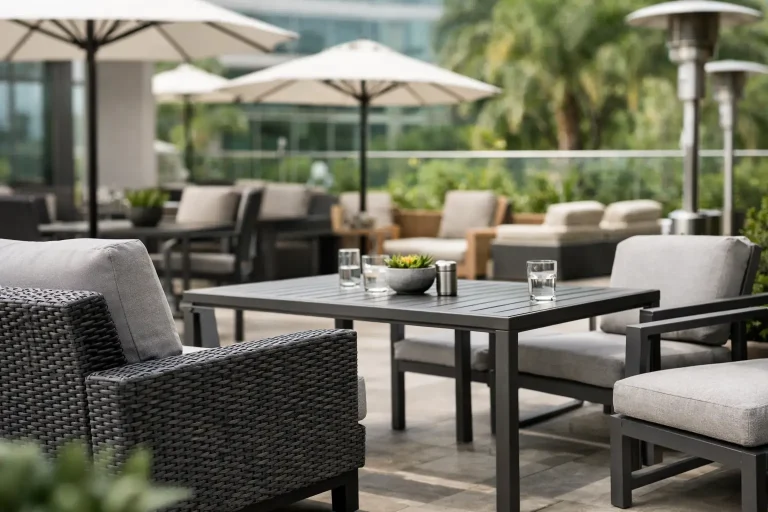
Commercial-grade aluminum is one of the most dependable choices for outdoor projects. Powder-coated aluminum furniture commonly delivers 7 to 15 years in commercial use when the coating quality, fabrication, and weld consistency are strong. It resists rust, keeps weight manageable for operations teams, and performs well across hospitality, residential tower amenities, and dining terraces.
That said, not all aluminum is equal. Thin-gauge frames can loosen or deform under constant use. Lower-grade powder coating can chalk, fade, or chip faster in intense sun and coastal air. In other words, aluminum is long-lasting, but only when the build quality matches the demands of the site.
Teak and other hardwoods
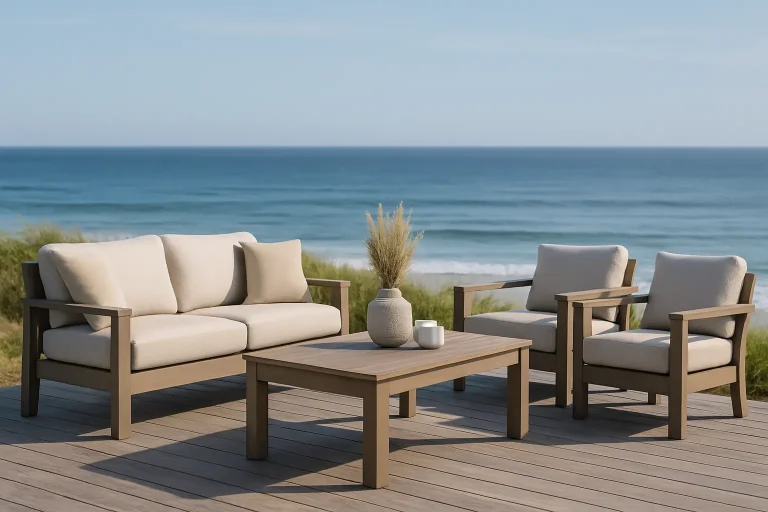
Teak can last 7 to 12 years commercially, and often longer structurally, but appearance expectations matter. In hotels, resorts, and premium food-and-beverage settings, buyers often judge furniture on finish consistency as much as structural life. Teak weathers naturally to a silver-gray tone if left untreated, which some properties want and others do not.
For teams that want the original warm tone preserved, maintenance becomes part of the lifespan equation. If the property will not commit to care, teak may still last, but it may stop looking brand-right much earlier.
Synthetic wicker and woven rope
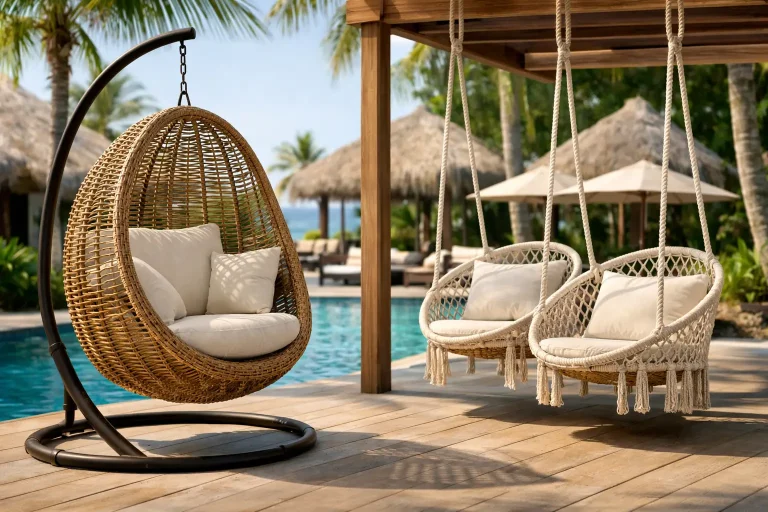
Commercial synthetic wicker typically lasts 3 to 7 years, while quality outdoor rope systems often fall into a similar or slightly longer range depending on UV resistance and frame construction. These materials can create a strong hospitality look, especially in lounge and poolside applications, but they are more exposed to cosmetic aging.
UV breakdown, fraying, cracking, and color fade are the usual pressure points. For covered terraces or lower-intensity settings, lifespan improves. In fully exposed beachfront or rooftop projects, these materials need careful specification.
Stainless steel
Stainless steel can perform for 10 years or more in commercial spaces, particularly when the grade is appropriate and maintenance is consistent. It delivers a clean architectural look and strong structural performance. But stainless is not automatically maintenance-free, especially in coastal environments.
Tea staining, surface corrosion, and finish wear can appear if the wrong grade is used or if salt deposits are left to sit. For GCC and coastal projects, specification discipline matters as much as aesthetics.
Resin and polymer furniture
Commercial resin chairs, tables, and loungers often last 3 to 7 years, sometimes longer in moderate-use environments. Their value is operational: easy cleaning, stackability, and lower replacement cost. They work well in pool areas, casual dining, and high-turnover spaces where practicality outranks luxury detailing.
Their trade-off is that lower-cost polymer furniture can become brittle, fade, or lose visual appeal before it fully fails structurally. For many operators, that still matters because replacement decisions are often driven by guest perception, not just physical breakage.
Upholstery, cushions, and slings
Frames often outlast soft components by a wide margin. Outdoor cushions usually need replacement in 2 to 5 years in commercial settings, depending on fabric grade, UV exposure, moisture management, and cleaning protocols. Slings often perform in a similar range, though premium systems can last longer.
This is where many budgets drift off course. A frame may be specified for a long service life, but if the soft goods cannot hold color, shape, or hygiene standards, the full set feels expired much sooner.
What shortens commercial outdoor furniture lifespan?
The biggest factor is not always the weather. It is often the combination of climate and operations.
High-traffic handling
In hospitality environments, furniture is dragged, stacked, shifted, and cleaned every day. Café chairs see very different stress than villa terrace seating. Pool loungers are constantly moved. Dining tables absorb impact, spills, and frequent wipe-downs. The more a piece is handled, the more frame joints, glides, finishes, and fasteners are tested.
This is why contract-grade construction matters. Residential-grade furniture can look suitable on paper yet fail quickly under commercial handling loads.
Sun, heat, and UV exposure
Full sun is hard on finishes, fabrics, and polymers. Dark colors absorb more heat. Certain coatings fade faster. Adhesives and woven materials can weaken over time. In hot-climate projects, especially exposed rooftops and pool decks, UV performance should be treated as a primary specification issue, not a secondary one.
Moisture, salt, and pool chemicals
Coastal properties face a different wear pattern than inland projects. Salt air accelerates corrosion. Pool chemicals affect finishes and fabrics. Poor drainage traps moisture in frames and cushions. Even premium materials need the right finish systems and maintenance schedules to hold up in these conditions.
Storage and off-season practices
Furniture that is stacked incorrectly, covered while damp, or stored in overheated back-of-house areas can age prematurely. Commercial furniture does not only wear during service hours. It also wears through poor operational handling when not in use.
Why commercial lifespan is different from residential lifespan
This distinction matters during procurement. A supplier can say a material is durable, but that claim means little without context.
A residential patio chair might be used a few times a week by a small household. A commercial dining chair might be occupied dozens of times a day, cleaned repeatedly, and moved by staff throughout service. The same material can therefore produce very different outcomes. When buyers ask how long does outdoor furniture last commercially, they are really asking whether the furniture was engineered for repeated stress, consistent appearance, and manageable lifecycle cost.
That is where contract specification earns its value. Frame thickness, welding quality, powder-coat process, fabric selection, replacement-part availability, and finish testing all affect how long furniture remains viable in a professional environment.
How to estimate lifespan more accurately for a project
The most reliable way to forecast replacement cycles is to evaluate furniture by zone, not by catalog category alone.
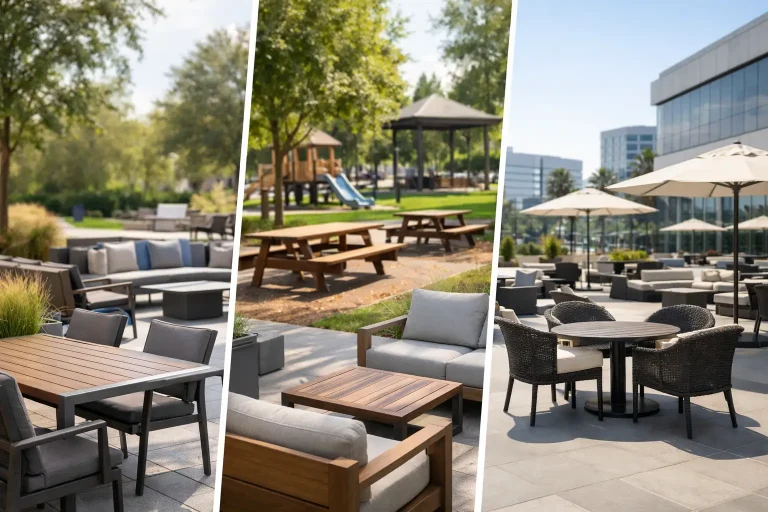
A shaded restaurant terrace, an exposed rooftop bar, a beachfront lounge, and a pool deck may all use outdoor seating, but they should not share the same lifespan assumptions. Exposure level, guest turnover, cleaning frequency, and repositioning needs vary too much.
For procurement teams and designers, a practical estimate usually looks like this: high-exposure, high-use zones should be budgeted for shorter cosmetic life and more frequent soft-goods replacement, while covered or lower-use zones can justify longer replacement cycles. This is also why mock-up approvals, material swatches, and design-stage consultation are not just aesthetic tools. They help reduce costly lifespan mismatches before rollout.
Buying for lifespan, not just unit cost
The cheapest chair is rarely the least expensive over five years. If a lower-cost item needs earlier replacement, causes guest-facing wear issues, or creates inconsistency across multiple sites, the savings disappear quickly.
A better procurement approach weighs acquisition cost against maintenance burden, expected replacement timing, and brand presentation. In large-scale projects, standardizing finishes and components can also simplify replenishment. That matters when a property needs to replace 20 units, not redesign an entire space because the original line is no longer available.
This is where vertically integrated suppliers bring a clear advantage. Greater control over manufacturing, finish selection, lead times, and SKU continuity supports better lifecycle planning, especially for multi-phase developments and hospitality groups managing repeated procurement.
How to make outdoor furniture last longer commercially
Maintenance alone will not rescue poor specification, but it does extend service life. Regular washing removes salt, dust, and chemical residue before they damage finishes. Staff training helps prevent dragging, improper stacking, and avoidable frame stress. Cushion storage and airflow reduce mildew risk. Periodic inspections catch loose hardware and finish damage early.
Just as important, select materials that match the site instead of forcing one look across every zone. A woven lounge chair may be perfect for a shaded terrace and the wrong choice for a fully exposed dining deck. A resin lounger may outperform a more expensive option around the pool because it fits the operational reality better.
For commercial buyers, the strongest results usually come from balancing design intent with usage data. That is the difference between furniture that only photographs well and furniture that keeps performing after seasons of real service.
PNZ Space Global approaches this at the project level, aligning material options, customization, mock-up review, and delivery planning around how each environment will actually be used.
If you are planning a commercial outdoor space, the smartest question is not whether the furniture will last. It is whether it will last long enough, look right while doing it, and stay easy to support as the property evolves.