Best Commercial Outdoor Planters for Projects
A planter fails long before it cracks. It fails when it stains paving after the first irrigation cycle, tips in a windy rooftop corner, fades under full sun, or arrives with finish variation that throws off the whole elevation. That is why choosing the best commercial outdoor planters is less about picking a shape and more about specifying a product that can survive real use, real weather, and real project timelines.
For commercial buyers, planters sit at the intersection of design intent and operational performance. They frame entries, define dining zones, soften hardscape, create privacy, and help large outdoor areas feel planned rather than empty. But unlike decorative accessories in a residential setting, commercial planters carry more responsibility. They need to hold up in high-traffic environments, support maintenance teams, align with brand standards, and arrive in volume without creating procurement delays.
What makes the best commercial outdoor planters
The best commercial outdoor planters do three jobs at once. They support the visual language of the project, they perform under site conditions, and they fit the procurement realities of a commercial build or refresh.
Material is the first filter. A planter that looks right in a rendering may be wrong for a pool deck, a beachfront terrace, or a hospitality roof exposed to heat and wind. Lightweight composites can simplify installation and reduce structural load, but some lower-grade options can chalk, warp, or look too thin for premium settings. Metal planters offer clean architectural lines and strong visual definition, yet they need the right finish system and drainage strategy to avoid corrosion, heat retention, and water marks. Concrete and stone-like constructions communicate permanence, though weight, freight, and placement logistics can become a serious constraint on upper levels or retrofit sites.
Scale matters just as much as material. Small planters disappear in large-format commercial environments. Oversized units create presence, but they can quickly become inefficient if they are too heavy to place, too large for freight access, or too deep for the intended planting scheme. The right proportion depends on viewing distance, surrounding furniture, and the role the planter is playing – statement piece, space divider, edge treatment, or screening element.
Drainage is where many otherwise attractive planters fail. Hospitality and mixed-use projects need irrigation and water management to work cleanly. Without proper drainage details, excess water can damage flooring finishes, stain facades, or create slip risk around entries and dining areas. A commercial planter should be specified with liner options, drainage control, and a clear understanding of how the landscape contractor and facilities team will maintain it after handover.
Matching planter types to commercial applications
Different sites call for different planter logic. A hotel drop-off, a rooftop lounge, and a restaurant terrace may all need planters, but they do not need the same planter.
Entry and arrival zones
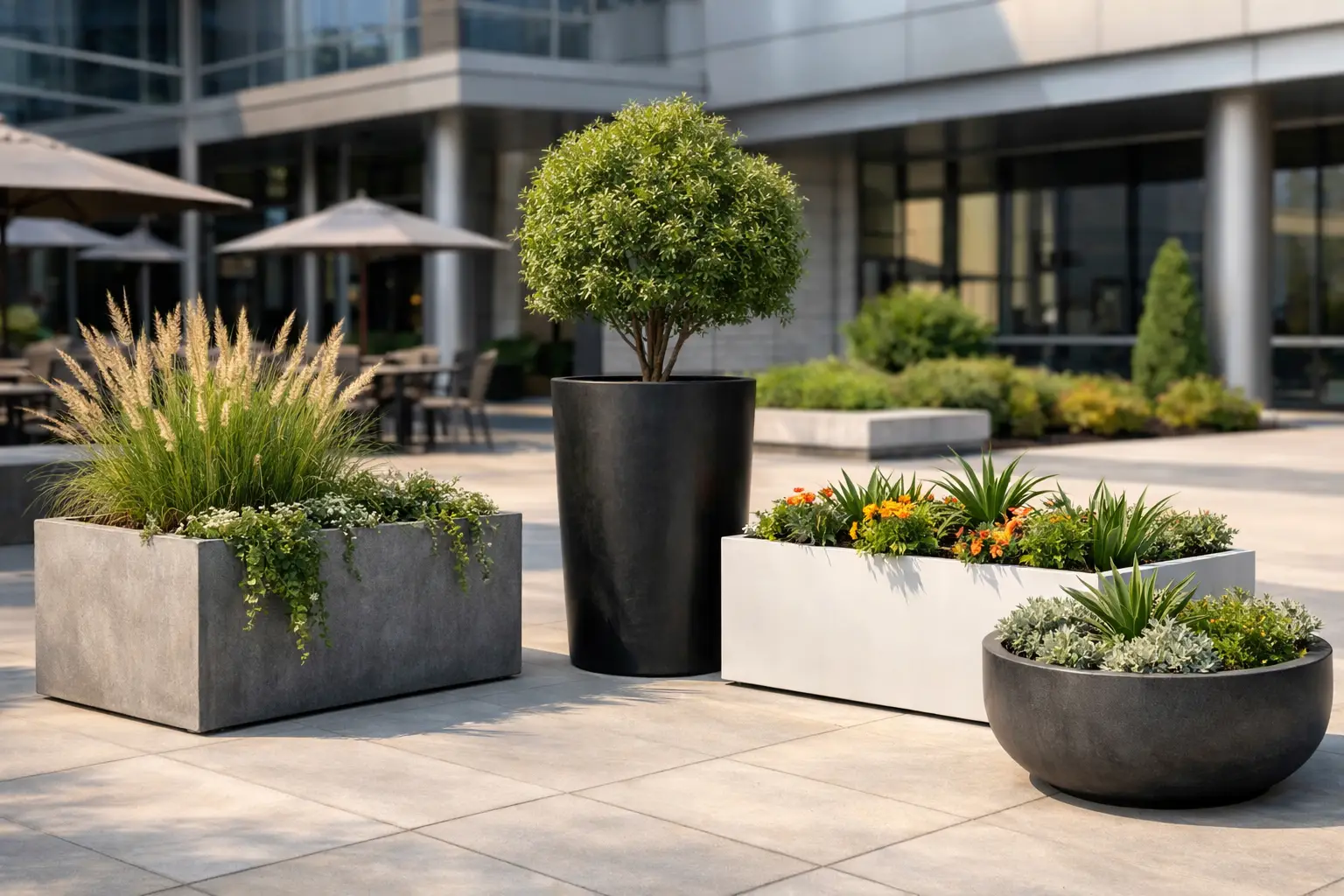
Front entries need planters with presence and finish consistency. This is where symmetry, scale, and first impressions matter most. Tall tapered forms, clean cylinders, and rectilinear boxes tend to work well because they read clearly from a distance and pair easily with architectural lines. In these locations, visual quality is non-negotiable. If one unit varies in tone, edge detail, or sheen, it will be noticed immediately.
Rooftops and elevated terraces
Rooftop projects usually prioritize weight, wind behavior, and access constraints. Lightweight but contract-grade composite or fiberglass constructions often make sense here, provided the wall thickness, finish quality, and UV resistance are specified correctly. The trade-off is that ultra-light models can feel less substantial unless they are engineered and detailed for commercial use. On rooftops, stability and anchoring strategy should be considered early, not after the furniture layout is approved.
Restaurants and hospitality dining
Dining environments often use planters as soft partitions. Long rectangular troughs can define circulation, separate tables, and create privacy without closing the space. Here, consistency across multiple units matters more than one hero piece. Procurement teams should look for repeatable dimensions, dependable lead times, and material finishes that coordinate with dining chairs, tables, and shade systems.
Pool decks and resort settings
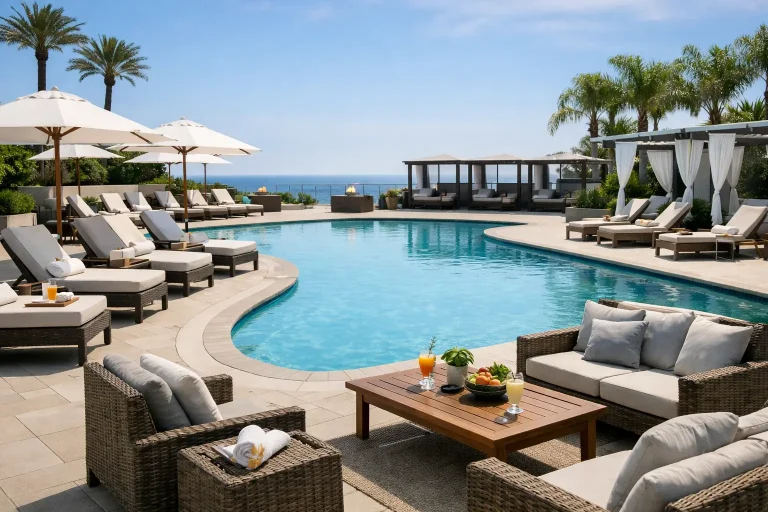
Pool areas are unforgiving. Water, chemicals, sun exposure, and frequent cleaning all stress the product. The best commercial outdoor planters for these spaces need non-reactive materials, stable color performance, and surfaces that can be cleaned without degrading. Textured finishes may look appealing, but some hold dirt and calcium residue more easily than smoother options. That trade-off should be weighed against the maintenance standards of the property.
The specification details buyers should not skip
A planter schedule should be treated with the same discipline as any other outdoor furnishing package. If the specification is vague, the result is usually rework, delay, or disappointing site performance.
Wall thickness and structural integrity should be verified, especially for larger sizes. Commercial planters are often moved during installation and maintenance, and weak corners or thin rims do not hold up. Finish performance should be documented as well. UV exposure, moisture resistance, and cleaning compatibility are not minor details when the product is expected to stay on site year-round.
Liners are another area where quality varies. A well-designed liner system can simplify planting changes, protect the planter body, and improve maintenance access. Poorly fitted liners create water issues and shorten product life. If the project calls for live planting across multiple zones, liner consistency is not an accessory feature – it is part of operational planning.
Color and finish control are especially important for multi-unit orders. A hospitality terrace with ten planters in slightly different shades looks uncoordinated, even if each planter is individually acceptable. This is where factory control and mock-up approval matter. For designers and procurement teams working to a brand standard, samples and pre-production confirmation reduce risk significantly.
Why sourcing capacity matters as much as design
A good planter on paper is not enough. Commercial buyers need a supplier that can deliver matching units in quantity, maintain specification control, and support the project from shop drawing to site delivery.
That is where operational depth becomes a deciding factor. Vertically integrated manufacturing gives buyers tighter control over dimensions, finishes, and scheduling. It also improves responsiveness when projects need customization, whether that means adjusting planter sizes, matching a finish palette, or coordinating with a broader outdoor furniture package.
For large hospitality, residential, and mixed-use projects, the planter program rarely stands alone. It sits alongside lounge seating, dining, poolside furniture, and shade products. Working with a supplier that understands the entire outdoor environment reduces coordination issues. It also helps designers keep a consistent material language across the project rather than patching together products from multiple vendors with different standards and lead times.
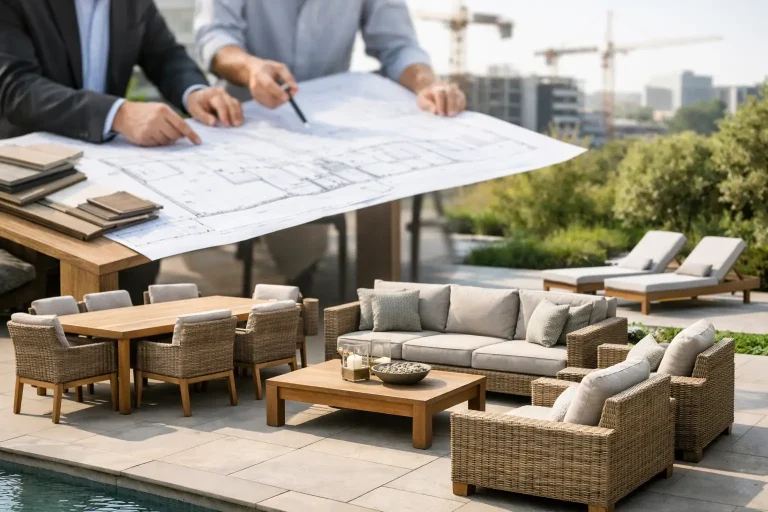
At this level, service is part of the product. 3D drawings, mock-up approvals, material swatches, and white-glove delivery are not extras for complex projects. They are practical tools that reduce mistakes and keep approvals moving. This is one area where PNZ Space Global’s vertically integrated model fits naturally with commercial planter sourcing, especially for buyers managing scale, customization, and delivery timing across multiple outdoor categories.
How to identify the best commercial outdoor planters for your project
Start with the site, not the catalog image. Sun exposure, wind load, salt air, cleaning routines, irrigation method, and access routes should shape the shortlist early. A planter that performs well in a shaded courtyard may not be the right answer for a fully exposed rooftop or beachfront deck.
Then look at the role each planter plays in the layout. Statement planters near entries need finish precision and architectural presence. Divider planters in dining areas need repeatability and proportion. Screening planters may need deeper planting volumes and stronger structural performance. One project can require several planter types, and forcing one model into every zone often compromises either design or function.
Next, test the supplier’s ability to execute. Ask whether finishes can be controlled across volume, whether custom dimensions are available, how liners and drainage are handled, and how the planters will be packed, delivered, and placed. These questions sound operational because they are. In commercial furnishing, execution quality is what protects design quality.
Budget should be considered in terms of total cost, not just unit cost. A cheaper planter that fades quickly, ships inconsistently, or creates maintenance issues is rarely the better buy. The strongest value usually comes from products that balance durability, visual consistency, and procurement reliability.
A better standard for commercial planter selection
The market offers plenty of outdoor planters that look good in isolated product shots. Far fewer are built and supplied for commercial realities: repeated specification, finish consistency, heavy use, climate exposure, and coordinated delivery at scale. That is the standard buyers should hold.
The best choice is usually not the trendiest profile or the lowest price. It is the planter that supports the project aesthetically, performs under the actual site conditions, and comes from a supplier prepared to manage the full process with discipline. When those pieces line up, planters stop being decorative add-ons and start doing what they should have done from the start – completing the outdoor environment with confidence.