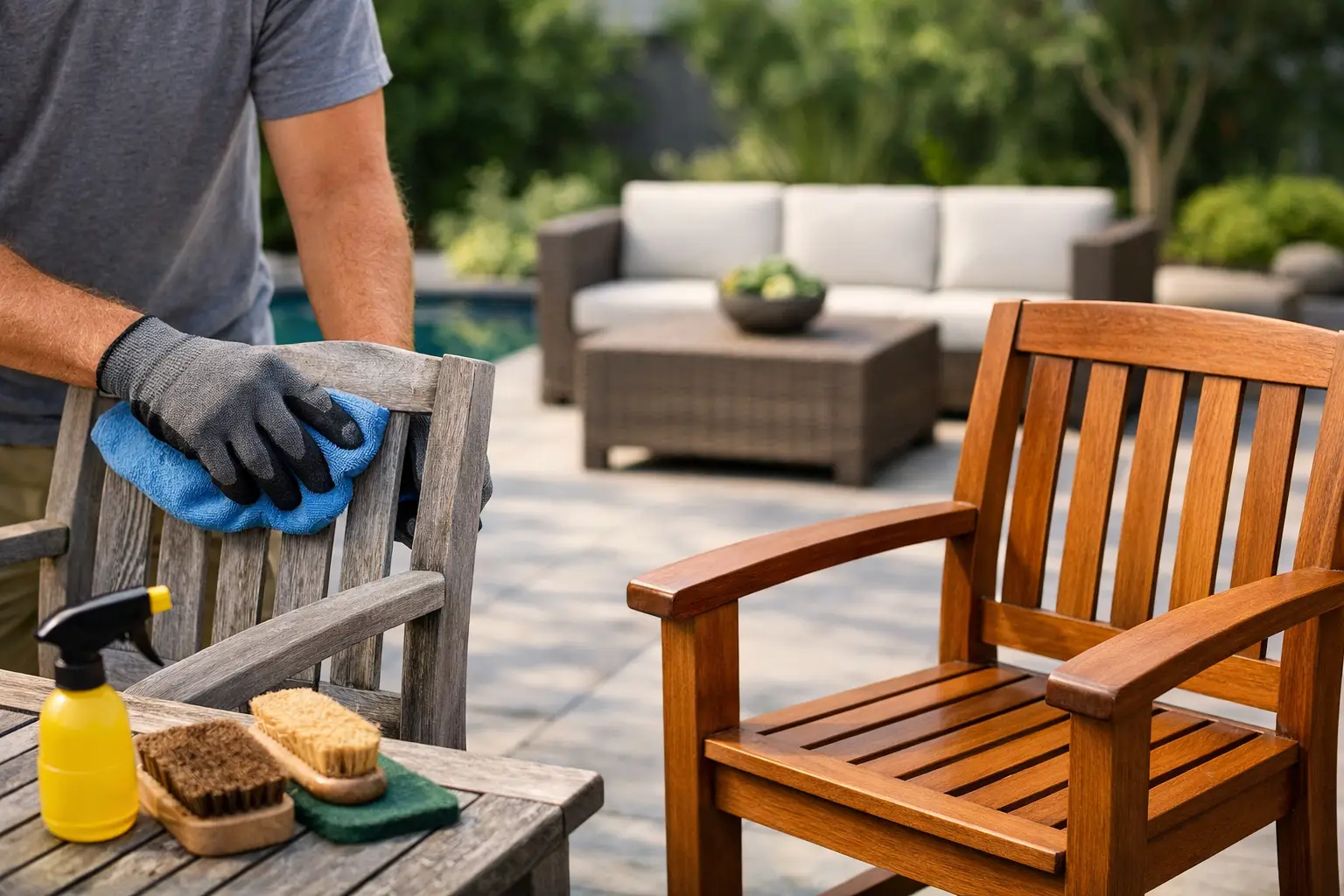
How to Reduce Outdoor Furniture Maintenance Costs
A low purchase price rarely stays low once the furniture hits a pool deck, rooftop, restaurant terrace, or resort courtyard. The real question is how to reduce outdoor furniture maintenance costs over the full life of the project, not just at the point of order. For developers, hospitality operators, and procurement teams, that means looking beyond unit price and focusing on material performance, replacement cycles, labor demands, and how easily each item can be cleaned, repaired, and reordered.
This is where many outdoor projects quietly lose margin. A chair that needs frequent touch-ups, a cushion program that fades unevenly, or mixed materials that require different care routines can turn a good-looking installation into an ongoing operational expense. The smarter approach is to engineer maintenance cost out of the specification before the first shipment leaves the factory.
How to reduce outdoor furniture maintenance costs starts with specification
Maintenance cost is largely decided before installation. If the specification stage is rushed, teams often inherit avoidable problems such as finish failure, staining, corrosion, difficult part replacement, or furniture that looks tired long before the expected refresh cycle.
For commercial and hospitality environments, the best specifications balance design intent with workload reality. A luxury rooftop lounge may call for refined finishes and tailored upholstery, but the pieces still need to withstand UV exposure, food service, cleaning chemicals, and repeated movement. A villa community may prioritize a softer residential look, yet procurement still needs products that can be maintained across multiple units without creating a patchwork appearance over time.
The practical takeaway is simple. Specify for the environment first, then refine for aesthetics. That usually reduces total maintenance spend more effectively than trying to protect a fragile spec after installation.
Match materials to the use case, not just the mood board
Outdoor furniture fails early when materials are chosen for appearance alone. Powder-coated aluminum, synthetic wicker, performance fabrics, and properly specified stone or ceramic surfaces each have different maintenance profiles. The right answer depends on placement, traffic, and climate.
For example, aluminum is often a strong choice for high-use commercial settings because it is lightweight, corrosion-resistant, and easier to clean than many alternatives. That can lower labor costs for repositioning and routine upkeep. Synthetic wicker may suit certain lounge settings, but lower-grade weave can crack or discolor, creating replacement issues that erase any upfront savings. Teak can age beautifully, but if the client expects a uniform golden finish without regular care, maintenance costs will climb quickly.
There is no universal best material. There is only the best material for the actual operating conditions.
Design choices that lower maintenance over time
Some of the biggest cost reductions come from details that do not always get enough attention during procurement reviews.
Furniture with simpler silhouettes is generally easier to maintain than heavily detailed pieces with deep grooves, exposed seams, or hard-to-reach joinery. In a hospitality setting, every extra minute needed to clean around decorative geometry gets multiplied across dozens or hundreds of units.
Removable, standardized cushion covers can also reduce maintenance friction, especially where food, sunscreen, and pool chemicals are part of daily use. If covers can be cleaned or replaced without taking the full item out of service, operators preserve appearance without carrying the cost of full-unit replacement. The same logic applies to glides, foot caps, and replaceable hardware. Small parts matter because they are often the first components to wear.
Finish consistency matters too. When projects combine too many surface types and colors, maintenance becomes harder to manage. Cleaning methods vary, replacement stock becomes more complicated, and visual mismatches show up faster. A tighter palette usually creates a cleaner operation as well as a more coherent design outcome.
Standardization is not boring. It is efficient.
Procurement teams sometimes resist standardization because they associate it with limited creativity. In reality, thoughtful standardization is one of the most effective ways to control maintenance cost across large outdoor programs.
Using common frame finishes, shared fabric families, repeatable table-top materials, and modular seating dimensions makes reordering easier and faster. It also reduces the chance of mismatched replacements months later. In multi-site or phased developments, standardization gives project teams specification control without sacrificing the overall design language.
For property groups and hospitality operators, this matters even more. A standardized outdoor program simplifies training, storage of spare parts, maintenance procedures, and future expansion.
Procurement decisions that prevent expensive problems
Maintenance cost is not just a product issue. It is also a supply chain issue.
One common problem is fragmented sourcing. Lounge seating from one supplier, dining from another, umbrellas from a third, and accessories from a fourth may look workable on paper. In practice, this often creates inconsistent lead times, uneven quality standards, separate warranty conversations, and multiple replacement pathways. When something fails, the maintenance burden expands beyond the item itself.
A more controlled procurement model can lower long-term cost by reducing those handoff points. When design support, material selection, approvals, manufacturing, and delivery are aligned, teams can catch maintenance risks earlier. That is especially useful on projects where outdoor lounge, dining, poolside, and accessory categories need to perform as one coherent package.
This is one reason many commercial buyers prefer vertically integrated partners. Better visibility into materials, production standards, and reorder capability tends to produce fewer maintenance surprises later.
Ask better pre-purchase questions
If the goal is cost reduction, the approval process should test maintenance assumptions, not just visual samples.
Ask how the finish performs in coastal, poolside, or high-heat settings. Ask whether cushion covers are replaceable and whether the fabric line will remain available. Ask which parts are most likely to wear and whether spares can be stocked. Ask how easily chairs stack, move, clean, and store. Ask what happens if one component needs replacement after six months or a year.
These are not minor technicalities. They are budget questions.
Labor is part of maintenance cost
Buyers often focus on repairs and replacements, but cleaning labor is one of the largest recurring expenses in outdoor environments. The more time-consuming the furniture is to wipe down, move, dry, cover, or reset, the higher the operating cost.
That makes ease of maintenance a design criterion, not an afterthought. Lightweight yet stable frames can speed up daily resets. Quick-dry materials can reduce downtime after weather exposure or poolside use. Table surfaces that resist staining and clean evenly can cut labor hours significantly in restaurants and hotels.
In large projects, even a small improvement in cleaning time per item adds up fast. Saving two or three minutes across hundreds of seats and tables, every day or every week, becomes a measurable operational gain over the year.
How to reduce outdoor furniture maintenance costs with better lifecycle planning
The lowest-maintenance project is not necessarily the one with the longest theoretical product lifespan. It is the one with the most predictable lifecycle and the least disruptive replacement pattern.
That means planning for selective refresh instead of total overhaul. If cushions, slings, glides, and surface components can be replaced independently, the asset lasts longer without forcing a full furniture swap. If matching items remain available for future phases, damage or expansion does not trigger an expensive redesign.
Lifecycle planning also helps avoid over-specifying. Not every zone needs the same construction level. A covered terrace, an exposed pool deck, and a private villa garden may require different material strategies. Using contract-grade products where traffic and exposure justify them, and tailoring secondary zones accordingly, creates a better cost structure than applying one standard across every setting.
Work with a supplier that can support the full operating picture
Outdoor furniture maintenance costs come down when specification, manufacturing, and delivery are treated as one coordinated process. For large or design-sensitive projects, that often means involving the supplier earlier, not later.
A partner with in-house design support, material flexibility, mock-up capability, and factory-level control can help identify costly weak points before they are built into the order. That may include simplifying a frame detail, adjusting a finish, standardizing components across categories, or aligning the specification with the cleaning routines the property team can realistically maintain.
For B2B buyers managing terraces, rooftop lounges, pool decks, restaurants, hotels, and multi-unit residential projects, this is where operational value shows up. A capable supplier does more than deliver furniture. The right one helps reduce lifetime friction across procurement, installation, maintenance, and reorder planning. That is the standard PNZ Space builds toward across contract-grade outdoor programs.
The best outdoor furniture programs do not just photograph well on handover day. They keep looking right with less labor, fewer replacements, and fewer procurement headaches long after the project opens.