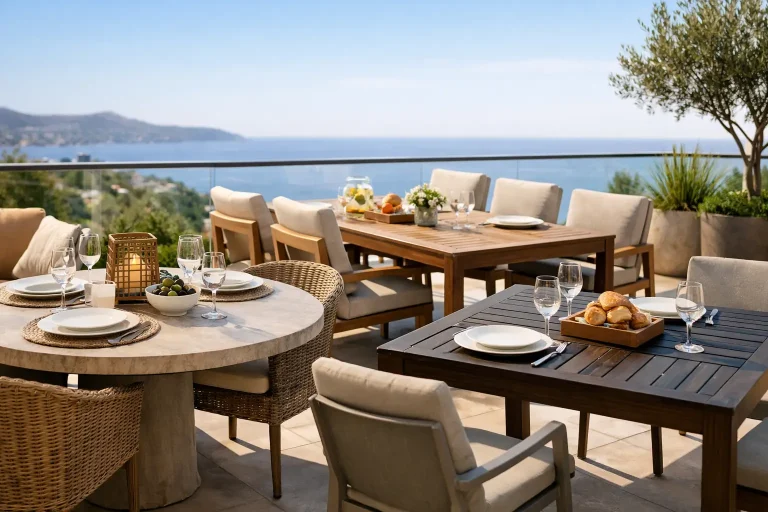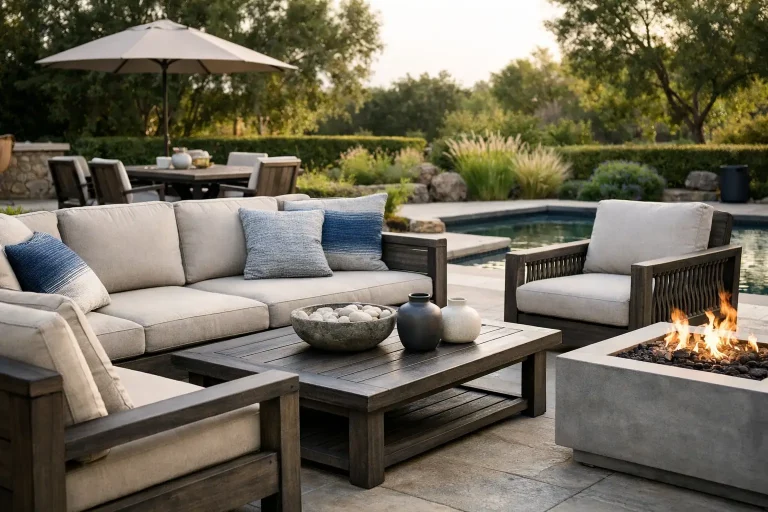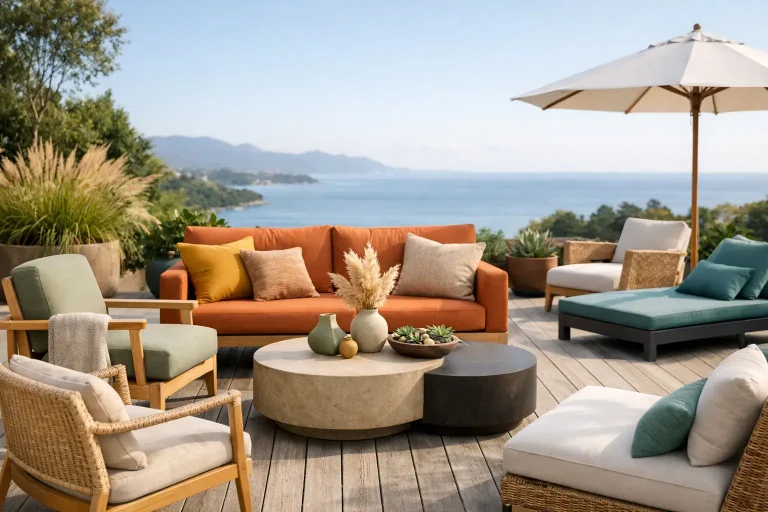
8 Contract Outdoor Dining Chair Styles That Win
A dining chair fails in the field in predictable ways – wobbly frames after one season, finishes that chalk under UV, seat pans that trap water, stack points that grind through coating, or arms that catch on table edges during fast turns. For procurement teams and designers furnishing restaurants, pool decks, rooftops, and resort terraces, “style” is never just a look. It is a performance decision that affects labor, replacement cycles, guest comfort, and how quickly your team can reset the floor.
Below are the best contract outdoor dining chair styles in real project terms: where each one fits, what it communicates visually, and what to specify so it holds up under commercial use.
What “contract” has to mean outdoors
Contract-grade outdoor dining chairs earn their keep through repeatable manufacturing tolerances and materials that behave well in heat, salt air, and heavy daily handling. In practice, that means stable joinery, consistent welds, finish systems designed for exterior exposure, and components that can be serviced or replaced without scrapping the chair.
It also means operational predictability. If you are outfitting 80 seats today and need 40 more for an expansion next quarter, you cannot afford a style that is impossible to match or a finish that varies from batch to batch. The best chair style is the one you can specify with confidence – and replenish.
Best contract outdoor dining chair styles (and how to choose)
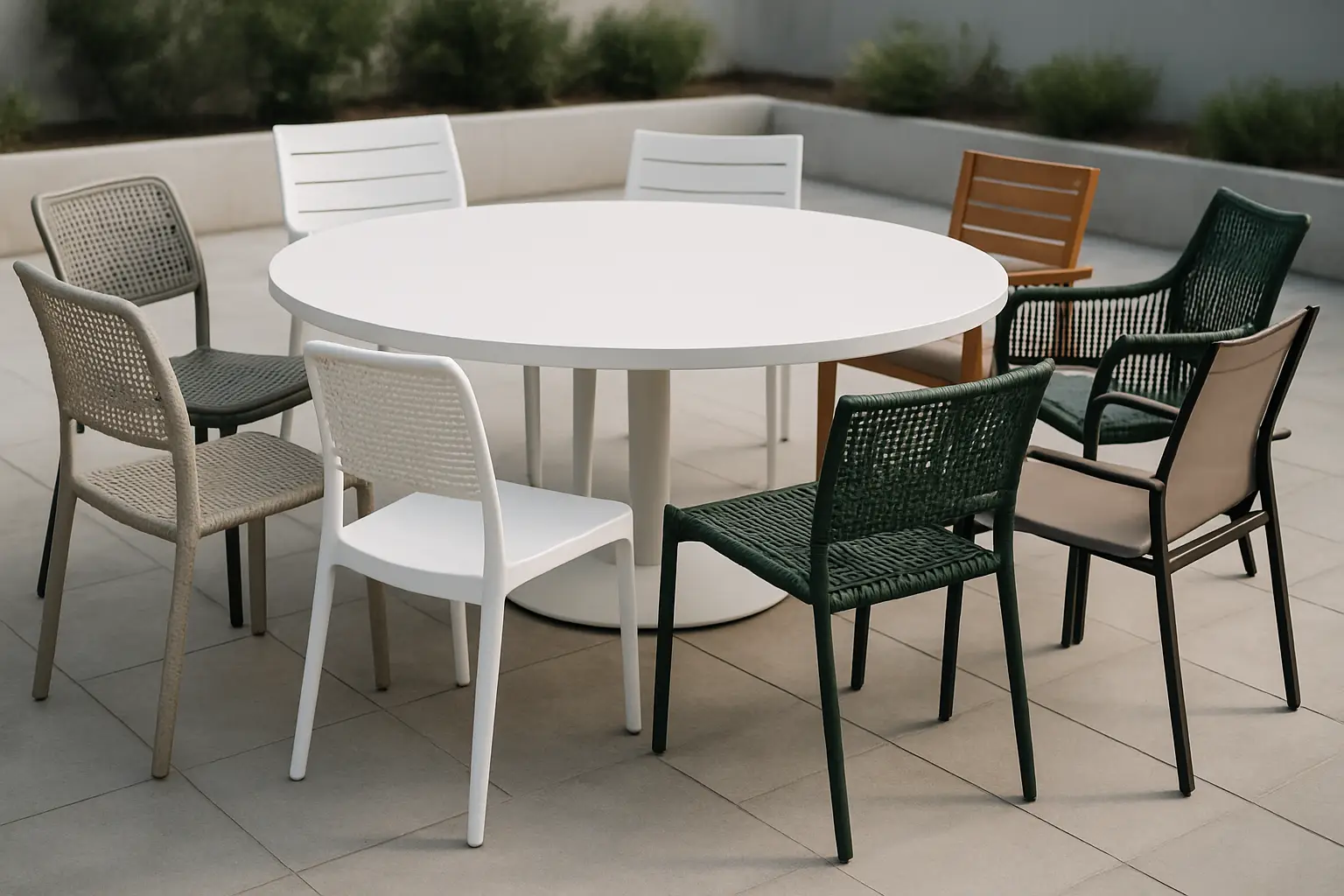
1) Powder-coated aluminum slat chairs
If you want maximum uptime with minimal maintenance, aluminum slat chairs are a top-tier contract staple. The visual reads clean and architectural, and the construction is straightforward – fewer parts, fewer failure points. Slats also dry fast after rain or nightly washdowns, which matters on pool decks and open-air dining.
The trade-off is feel. Slats can read “cool” and a bit firm without a cushion, so guest experience depends on seat geometry and how long your average dwell time is. Specify rounded slat edges, consistent spacing that will not pinch, and glides suited to your surface (stone, composite decking, textured tile).
2) Extruded aluminum bistro frames
Bistro-style frames with simple round or squared tubing are the workhorse look for high-turn patios. They are visually light, easy to move, and typically stack efficiently, which keeps your close-down routine fast.
Where projects go wrong is choosing tubing that is too thin for the abuse of nightly stacking and dragging. For commercial patios, confirm wall thickness, weight capacity, and stack protectors that prevent coating-to-coating grinding. If your operation runs late and chairs get handled hard, durability details show up quickly.
3) Rope-wrapped dining chairs (textile rope)
Rope chairs have become a hospitality default because they deliver texture and a resort-forward look without the bulk of traditional woven rattan. Done well, rope also improves comfort by giving slightly under load and staying cooler than solid surfaces under direct sun.
This style is best when you control specifications: UV-stabilized rope, tight and repeatable weaving patterns, and frame geometry that keeps rope tension stable over time. The common trade-off is cleaning. In dusty or high-pollen environments, rope requires a more consistent maintenance rhythm, and light colors show wear faster. If your site sees sand or heavy airborne dust, consider darker rope colors or tighter weaves that do not trap debris.
4) Outdoor wicker and woven-resin chairs
Woven resin is still one of the most commercially successful looks because it signals “outdoor dining” immediately and softens hard architectural environments. It performs well for resorts and restaurants aiming for warmth and approachability.
For contract use, performance depends on the weave and the frame underneath. Specify all-weather PE resin (not brittle PVC blends) over a corrosion-resistant internal structure. Ask how the weave terminates at stress points like the front seat edge and arm corners – that is where fraying starts first. The other consideration is replacement planning: woven patterns can vary by batch, so make sure the supplier can match color and weave tone when you reorder.
5) Teak and hardwood dining chairs
Hardwood chairs are the right choice when the project needs authenticity – beachfront resorts, high-end residential terraces, and hospitality concepts where material honesty is part of the brand story. Teak in particular handles moisture well and ages gracefully.
The trade-off is that “graceful” aging is still aging. If you want the original golden tone, you are committing to oiling schedules and housekeeping coordination. If you are comfortable with a silver patina, hardwood becomes more operationally friendly, but you still need stainless hardware and proper joinery to prevent loosening over time. For high-turn restaurants where chairs are dragged constantly, hardwood is better as a design accent than the full seating solution unless you have a disciplined maintenance program.
6) Outdoor upholstered sling chairs
Sling chairs are a quiet hero in contract dining because they solve comfort without cushions. The seat and back are tensioned performance fabric, so water drains, dry time is fast, and guest comfort is consistent. They are also efficient for staff – light enough to move quickly, structured enough to feel supportive.
The key is specifying the right fabric and tension system. Too much stretch leads to sagging, and low-grade mesh can fade or stiffen. Look for replaceable sling panels, reinforced stitching, and frames designed to keep tension even. Sling chairs excel for pool-adjacent dining, rooftop lounges, and any venue where you want comfort without loose cushions walking away.
7) Molded resin and polypropylene chairs
For high-volume, high-abuse environments, molded resin chairs can be the most cost-effective lifecycle choice. They stack well, clean easily, and tolerate constant movement. Visually, they have also improved – matte finishes, modern silhouettes, and perforation patterns that help with drainage.
But it depends on climate and quality. In extreme heat, low-grade resins can warp or become brittle over time. Specify UV inhibitors, colorfastness expectations, and a structure designed for commercial loads. If the concept is premium, resin can still work – just choose a design with stronger lines and a finish that does not look overly glossy or “event rental.”
8) Mixed-material chairs (metal + teak, aluminum + rope)
Mixed-material chairs are often the most design-forward option because they balance texture with a crisp frame. Think aluminum legs with teak arm caps, or a powder-coated frame paired with rope and a contoured seat.
The benefit is a distinctive look that differentiates your venue and photographs well. The trade-off is specification complexity. Every material has its own aging pattern, so you need to align expectations: metal coatings must resist chips at contact points, wood needs a plan for patina, and rope colors need UV stability. Mixed-material chairs are best when your supplier can control finishing in-house and provide consistent sampling and approvals.
Spec details that decide whether the style succeeds
A chair style can be “right” and still underperform if the build choices do not match your site conditions and operating model.
Start with climate exposure. Coastal properties need corrosion resistance and hardware that will not pit. Rooftops need UV stability and finishes that will not chalk. Pool decks need quick-dry surfaces and glide choices that will not skate on wet tile.
Then look at operational handling. If chairs are stacked daily, specify stackability that does not damage the finish, along with bumpers or stack guards. If your team drags chairs more than they lift them, focus on glide quality and frame geometry that resists racking.
Finally, plan for replenishment. Contract projects rarely stay static. The best contract outdoor dining chair styles are the ones you can reorder with consistent color, finish, and dimensions, whether you are adding seats, replacing a damaged zone, or rolling the concept to a second site.
How to match chair style to the space
Restaurants with high turnover usually benefit from lightweight, stackable styles – bistro frames, slat aluminum, or quality molded resin – because speed is money. Resorts and hotels can justify more tactile options like rope, woven resin, or mixed materials because the guest experience and brand impression carry more weight.
For villas and residential-scale terraces specified by designers, comfort and texture often win, but “residential” does not mean fragile. If staff will service the space, specify contract construction anyway. You want a chair that looks tailored and performs like an asset.
If you are specifying across a property portfolio, consider standardizing on two to three chair families that share finishes and heights. That makes procurement simpler, spares easier, and future refreshes less disruptive.
Project support that reduces risk
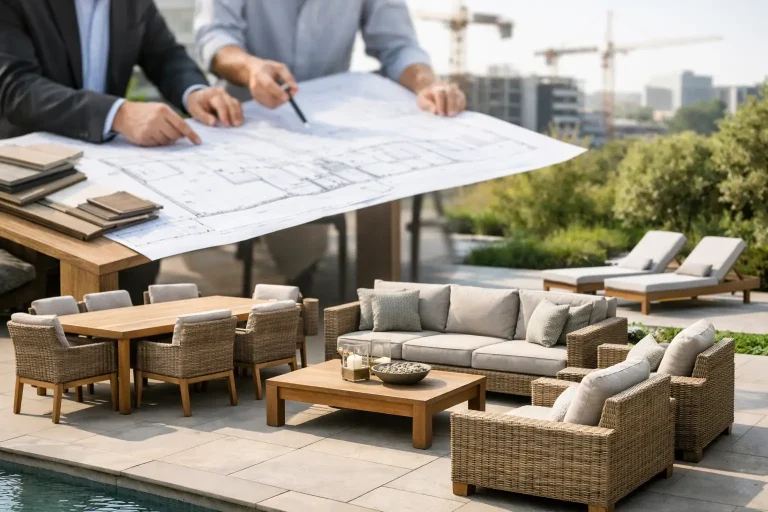
The chair you choose is only half the outcome. The other half is how cleanly the project moves from spec to approvals to delivery. When you are balancing aesthetics, durability, and lead times, the fastest path is a supplier that can provide accurate 3D drawings, controlled mock-up approvals, and consistent production.
That is the operational advantage of working with a vertically integrated partner like PNZ Space Global – manufacturing control, broad outdoor categories for one-stop procurement, and project support that keeps decisions moving without sacrificing specification discipline.
A chair style should not create surprises after installation. If you specify with the environment, the operations team, and replenishment plan in mind, the right style feels obvious – and it keeps looking that way long after opening night.
Choose the chair that your staff can live with at midnight, not the one that only looks perfect at 2 p.m. in a rendering.